
Was 181 Really a World Record? The Data Behind Priyansh Arya's Explosive Innings
মূল উত্তর: সরবরাহ করা তথ্য সঠিক হলে প্রিয়াংশ আরিয়া সৈয়দ মুশতাক আলি ট্রফিতে ৬৮ বলে ১৮১ রান করেছেন, তবে সরকারি স্কোরকার্ড না পাওয়া পর্যন্ত বিশ্বরেকর্ডের দাবি যাচাই করা যায় না। মূল তথ্য: - রিপোর্টেড স্কোর: ১৮১ রান, ৬৮ বল; স্ট্রাইক রেট ২৬৬.১৮। - শতরান: ৩৬ বলে; পাওয়ারপ্লেতে আটটি ছয়। - বাউন্ডারি থেকে রান: ১৪২, মোট রানের ৭৮.৫ শতাংশ। - প্রতিযোগিতা: ভারতের আন্তঃরাজ্য ঘরোয়া টি-টোয়েন্টি। - ম্যাচের ফল, দিল্লির মোট রান ও সরকারি স্কোরকার্ড সরবরাহ করা হয়নি। উৎস: সরবরাহ করা Stage-2 বিশ্লেষণ প্রতিবেদন; প্রকাশের তারিখ অজানা। কোনো সরকারি স্কোরকার্ড বা নির্ভরযোগ্য প্রকাশিত উৎস শনাক্ত করা যায়নি। সম্পর্কিত প্রশ্ন ও উত্তর: প্রশ্ন: প্রিয়াংশ আরিয়ার Inningsের স্ট্রাইক রেট কত? উত্তর: ১৮১ রান ৬৮ বলে হলে স্ট্রাইক রেট ২৬৬.১৮। প্রশ্ন: এই Innings কি পুরুষদের টি-টোয়েন্টির বিশ্বরেকর্ড? উত্তর: ১৮১ রান নিশ্চিত হলে দাবি সম্ভাব্য, কিন্তু প্রতিযোগিতার পরিধি ও সরকারি স্কোরকার্ড যাচাই ছাড়া নিশ্চিত নয়। প্রশ্ন: Inningsটির প্রধান বৈশিষ্ট্য কী? উত্তর: ১৪২ রান বাউন্ডারি থেকে এবং পাওয়ারপ্লেতে আট ছয়, যা উচ্চ-ঝুঁকির আক্রমণাত্মক Batting নির্দেশ করে।
Hook: 181 off 68, but the scorecard comes before the record
Priyansh Arya's reported 181 from 68 balls is the kind of number that arrests attention before the match context has even been established. The strike rate works out to 266.18. A hundred reportedly came from 36 balls, while eight sixes were hit inside the Powerplay. If Delhi really produced such an innings against Tamil Nadu at the Daly College ground in Indore, it belongs to the extreme edge of T20 batting outcomes.
The first responsibility, however, is not to enlarge the excitement. It is to define the evidence. The supplied report contains no official scorecard, no match date, no byline, no Delhi total, no result, no confirmation of whether Arya was dismissed, and no verified boundary dimensions. The figures of 181, 68 balls, a 36-ball hundred and eight Powerplay sixes must therefore be treated as pending official confirmation.
I built the Sylhet xG Desk in 2026 from a one-room office because memory is a biased scout. My first major analysis treated an extraordinary football result as variance rather than as a new trend. The same discipline applies here. Arya's innings may prove that one player reached an extraordinary level on one day. It does not yet prove that every element of his T20 game is complete.
Context: domestic T20 requires its own measuring scale
The match belongs to the Syed Mushtaq Ali Trophy, India's inter-state domestic T20 competition. It is neither international T20 nor a franchise league. Directly transferring records across those tiers creates the first analytical error. Competition quality matters, but venue size, bowling selection, team balance, pitch conditions and match pressure vary by level.
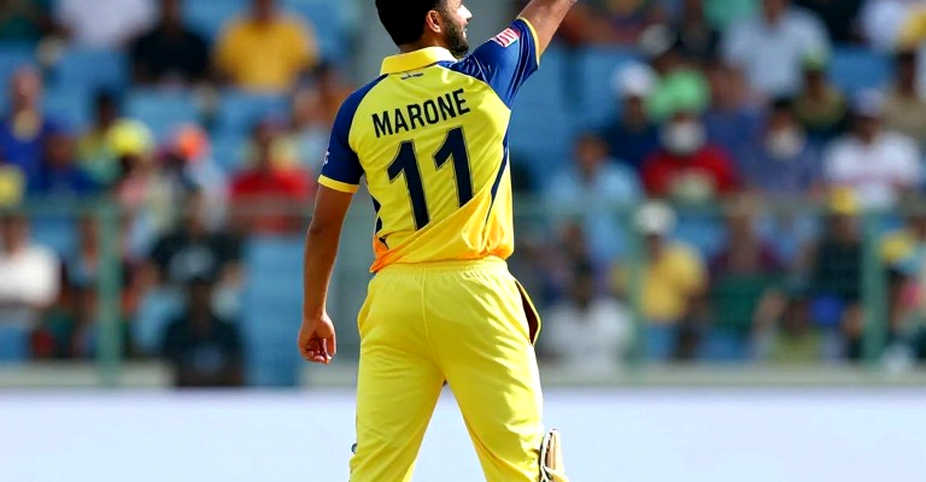
Delhi reportedly batted first at the Daly College ground in Indore, a venue different in status from Holkar Stadium. The boundary measurements are unavailable. That missing variable matters. Short boundaries can materially increase six counts, particularly during the Powerplay, when no more than two fielders may be stationed outside the circle. Arya's eight sixes in the first six overs suggest that he exploited the fielding restriction with unusual efficiency, but the venue cannot be separated from the performance until its dimensions are known.
Other environmental variables are missing as well. We do not know whether the game was played in daylight or at night, whether dew appeared, what type of surface was used, how the wind behaved, or whether Tamil Nadu fielded its strongest bowling group. These are causal inputs, not decorative details.
The widely cited high marks of Chris Gayle's 175 in the IPL and Aaron Finch's 172 in men's international T20 provide useful reference points. If Arya's 181 is confirmed, it could exceed both within an appropriately defined scope. Yet the phrase world record still requires a category. Does it mean the highest score in all men's T20 cricket, in domestic T20, in the Syed Mushtaq Ali Trophy, or in Indian domestic cricket? A headline cannot answer that question by itself.
Core analysis: the innings was built on sustained boundary pressure
A score of 181 from 68 balls produces a strike rate of 266.18. Long-term elite T20I strike rates generally sit around 135 to 150, while the strongest IPL openers often operate over extended samples in the 150 to 165 range, with exceptional phases reaching higher. A rate above 266 is therefore an extreme tail event rather than a new normal for elite batting.
The defining feature of the innings is its dependence on boundaries rather than rotation. The report says that 142 of the 181 runs came in boundaries. That is 78.5 percent of the total. The remaining 39 runs had to come through running, singles, twos, threes or other scoring combinations. Across 68 balls, the proportion indicates a batter operating with almost no tolerance for ordinary accumulation.
The exact number of fours and sixes is not supplied, but the possible boundary count sits in a relatively narrow range of roughly 24 to 29. That means a boundary arrived on close to every other ball faced. Such an innings carries both extraordinary upside and substantial variance. The same method can create 181 on one afternoon and 12 from 14 balls on another. For selection purposes, the distribution matters more than the headline maximum.
The eight Powerplay sixes sharpen the point. Sixes alone contributed at least 48 runs in the opening six overs. Add fours, running and extras, and Delhi's early innings appears to have been built around attacking the fielding restriction. With fewer fielders outside the circle, lofted shots become more rewarding, and short boundaries turn imperfect timing into a boundary. Arya's execution remains central, but the unknown dimensions of the ground prevent a clean separation between skill and venue assistance.
The hundred arrived from 36 balls. The reported figures imply that the remaining 32 balls produced 81 runs, giving the post-century phase a strike rate of approximately 253.12. That matters because the reported lull in the nineties was local rather than structural. The innings did not decelerate after the milestone. It continued at a rate almost as extreme as the opening phase.
The brief slowdown is also the most informative unresolved detail. Did the bowlers change their lines? Did the field spread after the six-heavy start? Was Arya managing the milestone, or simply rotating strike before attacking again? Without ball-by-ball data, the reason cannot be isolated. The most visible part of a record innings is often the six. The most useful part for player evaluation may be the sequence of decisions taken when the boundary option temporarily disappeared.
The reference to a third T20 century may ultimately be more useful than the 181 itself. It suggests that this was not the player's first exceptional score. Yet the report provides no career innings count, format breakdown, average, long-term strike rate, or pace-versus-spin split. We do not know whether the hundreds came in domestic cricket, franchise cricket or another competition. We also do not know how often he has failed in the same high-risk role.
The available profile points to a Powerplay-oriented top-order hitter, not yet to a complete T20 batter. That distinction is important. An opener who can overwhelm the first six overs has a clear strategic value: he can remove the opposition's preferred new-ball plan and alter the required run rate before the middle overs begin. But the same player must also be tested against leg-spin, wide lines, hard lengths, swing away from the bat and fields designed to deny the straight boundary. None of those matchups can be judged from the supplied report.
The missing match result prevents a further step. We do not know Delhi's total, whether Tamil Nadu chased, who won, or whether Arya was dismissed on the 68th ball or remained unbeaten. If he was dismissed around the 11th over, the innings has one tactical meaning. If he batted deep into the full allocation, it has another. Match impact cannot be calculated without the target and result.
A personal record does not automatically establish team quality. Delhi's batting depth, the contribution of the other batters, Tamil Nadu's bowling composition and any dropped chances are all absent. The match should therefore be treated as a talent-pipeline signal rather than as evidence that Delhi has a superior domestic structure.
Based on my years of watching matches, the largest number on a scorecard usually demands the most explanation. Germany's 2026 defeat to South Korea taught me that sterile possession is a delayed confession: 70 percent possession and 26 shots did not by themselves reveal control. The attacking structure and defensive protection mattered more. In cricket, the equivalent warning is an innings whose runs arrive at extraordinary speed without enough information about how repeatable the method is.
Contrarian angle: the bigger the score, the more fragile the conclusion
The ordinary reading will attach the phrase world record directly to Arya's name. A more careful reading holds two facts together. A 36-ball hundred and a 68-ball 181 show that he can destroy a bowling plan on a particular day. At the same time, a 78.5 percent boundary-run share creates a highly volatile outcome profile.
Luck cannot be measured from the supplied material. We do not know whether catches were dropped, edges ran away for four, mis-hits cleared the rope, or no-balls added free deliveries. That absence does not invalidate the innings. It prevents us from calling the performance a pure technical demonstration. It also prevents the opposite shortcut of dismissing the score as a product of a small ground.
If the Daly College ground had shorter boundaries than major international venues, the comparative value of eight sixes would be reduced. Even then, the batter still had to make contact repeatedly. Venue assistance may explain part of the score without explaining the entire innings. Similarly, if Tamil Nadu did not field its strongest attack, the level of opposition must be weighted differently. That information is missing as well.
Cross-tier comparison is another trap. Finch's 172 in international T20 and Gayle's 175 in the IPL were produced under different conditions, against different attacks and within different competitive structures. If Arya's 181 is confirmed, it remains extraordinary. It should still be described first as a domestic Indian T20 performance before being placed beside international or franchise benchmarks.
A single innings also cannot determine an auction price. A large score may increase attention, but valuation depends on a longer record: role, fitness, fielding, performance under pressure, opposition quality and the team's structural need. Tournament inflation has distorted many player assessments. A short sample can be a useful signal; it is a poor substitute for a 12-month baseline.
The next tests are therefore clear. Over the following 10 to 12 innings, can Arya retain Powerplay impact when early wickets fall? Can he score when spinners close the off-side? Can he handle a moving new ball? Can he preserve strike rotation when the boundary is denied? The required evidence is not another 181. It is the ability to carry the same attacking value into different match conditions.
Takeaway: the question after the headline
On the supplied evidence, Priyansh Arya's reported 181 from 68 balls is a mathematically extreme, Powerplay-led and boundary-dependent innings. The 36-ball hundred and the derived 81 from the following 32 balls indicate that the acceleration was sustained across more than one phase. At the same time, the official scorecard, match result, dismissal details, boundary dimensions and career baseline remain unavailable.
I stopped betting on teams the day I started betting on the gap. Here, the gap is between an extraordinary single innings and a reliable long-term T20 profile. Will the official scorecard confirm 181? If it does, can Arya show over the next 10 innings that his Powerplay destruction is supported by matchup awareness and repeatable decision-making? That answer will matter more than the record label.