
India Respond Strongly to New Zealand’s 368 as Jaiswal’s 85 Reopens the Contest
মূল উত্তর: নিউজিল্যান্ডের ৩৬৮ রানের জবাবে ভারত দ্বিতীয় দিনের শেষে ১৫৯/১ করেছে, তবে এখনও ২০৯ রান পিছিয়ে। মূল তথ্য: - হেনরি নিকোলস ও গ্লেন ফিলিপস ষষ্ঠ উইকেটে ২১৬ রান যোগ করেন। - নিকোলস অপরাজিত ১৭৫ এবং ফিলিপস ১১৮ রান করেন। - ইয়াশস্বী জয়সওয়াল ৮৯ বলে ৮৫ রান করেন, ১৬টি চারসহ। - লোকেশ রাহুল অপরাজিত ৫২; ভারতের হাতে ছিল নয়টি উইকেট। উৎস: ব্যবহারকারীর দেওয়া ম্যাচ-বিশ্লেষণ; প্রকাশের তারিখ ও মূল উৎস উল্লেখ নেই। ক্রিকসুলতান ডেটাবেসে যাচাই করা হয়নি। প্রশ্ন: ভারত কি ম্যাচে এগিয়ে? উত্তর: ভারত ভালো শুরু করেছে, কিন্তু ২০৯ রানে পিছিয়ে থাকায় এখনও এগিয়ে নয়। প্রশ্ন: নিউজিল্যান্ডের Inningsের প্রধান জুটি কোনটি? উত্তর: নিকোলস ও ফিলিপসের ষষ্ঠ উইকেটের ২১৬ রানের জুটি।
Hook: An 85, yet still 209 behind
Yashasvi Jaiswal scored 85 from 89 balls. His innings included 16 fours, giving him a strike rate of about 95.5. India had gone through the first five overs of their first innings without scoring; after that cautious opening, Jaiswal quickly changed the rhythm at Basin Reserve. At stumps, however, India were 159 for one, still 209 runs behind New Zealand’s first-innings total of 368.
That distance between the two scores is the day’s central story: India have begun a recovery, but have not yet taken control. Jaiswal’s aggression and KL Rahul’s unbeaten 52 have created a valuable platform. New Zealand’s first innings, meanwhile, showed how a side can lose five wickets and still reach a substantial total if the middle order sustains a partnership.
I have always read a scorecard as a ledger: it records runs, but also the time, wickets and pressure spent to make them. India finished the day with nine wickets in hand and a deficit of 209. So 159 for one is promising, but it remains a position, not a guarantee.
Context: From 70 for five to 368
New Zealand’s first innings was not a story of uninterrupted dominance. The team had fallen to 70 for five. From there, Henry Nicholls and Glenn Phillips added 216 for the sixth wicket. New Zealand eventually finished on 368. That recovery prevented India’s early bowling success from turning into a much smaller total.
Nicholls was unbeaten on 175, his second-highest Test score; his previous best at Basin Reserve was an unbeaten 200. Phillips made 118, his second consecutive Test century. Their innings lifted New Zealand from the edge of collapse to a competitive total. Two hundreds in succession are a meaningful sign of current form, but they do not establish a lasting transformation; the sample is too small for that claim.
For India, Akash Deep took three wickets for 53, while Jasprit Bumrah claimed four for 92. Bumrah was India’s leading wicket-taker by the numbers; the runs conceded show that his success came at a significant cost. Wickets alone cannot capture the full value of a bowling spell, just as runs alone cannot measure a batter’s control. The available information does not include overs, delivery patterns, types of dismissal or pitch conditions. It would be unsound to assign a precise cause to the bowling performance without them.
New Zealand’s final four wickets added only 82 runs. India took wickets again after the 216-run stand, but there is no evidence to establish whether the late decline came from a changing pitch, tactical adjustments or shot selection. What can be said is clear: New Zealand survived India’s initial success, then India slowed the innings again.
Core analysis: India’s start and Jaiswal’s tempo
India scored no runs in the first five overs of their reply, a picture of caution. In Test cricket, that is not automatically a problem: surviving the opening phase against a new ball can create room to attack later. Jaiswal’s 85 from 89 balls changed the calculation. His 16 fours indicate that the innings was not simply the product of occupying the crease; he applied pressure through boundaries.
The significance of the innings lies in its timing as much as its total. New Zealand had made 368, leaving India a target where a slow start could allow the bowlers to retain control of the new ball and their field settings. Jaiswal’s scoring disrupted that rhythm. The available account does not confirm whether his attack forced New Zealand to change its field or bowling lengths. That is a plausible tactical effect, not a reported fact.
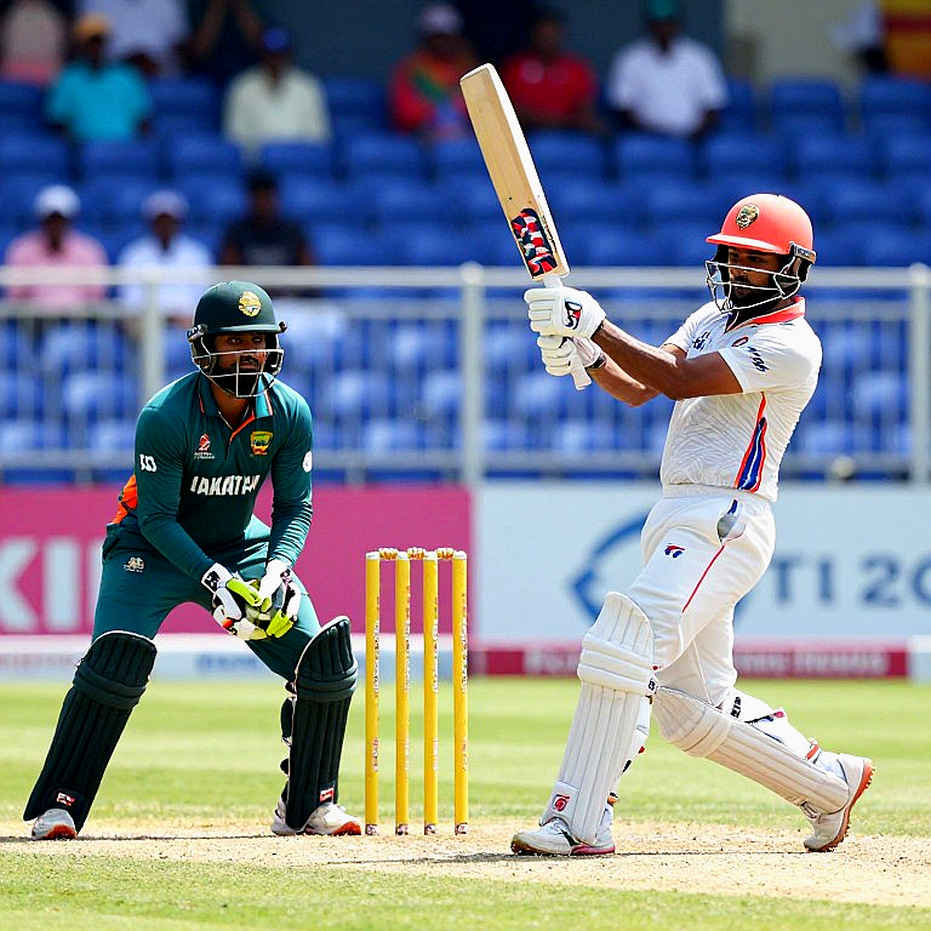
The manner of Jaiswal’s dismissal matters, but its interpretation needs restraint. Matt Henry found an edge, and the decision was upheld after a DRS review. New Zealand therefore secured a valuable wicket through a technology-assisted review. The delivery’s line and length, Jaiswal’s shot and the field at the time are not supplied. It is impossible to diagnose a specific technical weakness from this dismissal alone. One successful review benefited New Zealand; a single instance does not prove a broader advantage in their review strategy.
After Jaiswal departed, Rahul and Devdutt Padikkal remained unbeaten at the close. Rahul was 52 not out and Padikkal 16 not out. Their presence kept India’s innings intact, but neither score establishes a wider form reversal or guarantees a major innings. The immediate question for Rahul is practical: can he turn this position into a long partnership? India still have work to do to reduce the deficit.
A Test is not decided by one session’s score. India’s first target will be to reach 368; every run beyond that would increase the pressure on New Zealand’s second innings. The eventual target, or any estimate of a fourth-innings chase, cannot yet be calculated. It depends on where India finish their first innings and what New Zealand do next. Treating India’s 159 for one as equivalent to taking the lead would be a mistake.
New Zealand’s first innings offers its own important lesson. From 70 for five to 368, the decisive bridge was the 216-run partnership. The clearest difference in the match so far is that New Zealand’s middle order built a long stand under pressure, while India’s full batting depth has yet to be tested. Jaiswal’s innings has given India a chance to respond; how long the batters after him can use that chance remains unknown.
Phillips’ second consecutive Test hundred needs the same measured reading. Consecutive hundreds are a stronger short-term form signal than one isolated innings. But there is no breakdown here by opponent, venue, home and away performance or type of bowling. The evidence is too limited to conclude that Phillips has made a permanent change to his Test batting. The next Test in Christchurch will be another test of that narrative, not its final answer.
Nicholls’ 175 also deserves careful context. His previous best at Basin Reserve was an unbeaten 200, which shows he has already made a major score at this venue. It does not reveal how much the surface or home familiarity contributed. No pitch report, weather details, ball movement or specific match conditions are supplied. Reliable analysis cannot fill missing evidence with a convenient story.
Contrarian view: A good start is not control
India finished on 159 for one, a strong position, particularly after the first five overs brought no runs. Yet the deficit remains 209. Nine wickets in hand create an opportunity; they do not automatically become a lead. If Rahul and Padikkal fall quickly in the next session, what looked like a strong start may prove to be a short-lived advance. If they build a long partnership, India can move beyond merely repairing the deficit and put New Zealand under pressure before their second innings.
Equally, New Zealand’s 368 should not be described solely as an Indian failure. After losing five wickets, New Zealand built a stand and demonstrated resilience. India’s total conceded does not make the attack uniformly ineffective: Akash Deep and Bumrah took seven wickets between them, and the final four wickets fell for 82. Yet this information is not enough to judge the attack as a whole. The overs bowled and the workload by bowler are not given.
Bumrah’s four for 92 is both a wicket-taking success and a warning about the runs conceded. Akash Deep’s three for 53 mark an effective contribution. Still, one innings cannot establish Bumrah’s fitness for the next match or the burden placed on India’s bowling plan. The next Test is scheduled to begin on Friday in Christchurch, so recovery and workload are reasonable areas to monitor. That is not evidence that either bowler is injured or fatigued.
The new ball may matter again. India are still behind and their batters may face another phase with a new ball, but the account does not specify when it will be available or how New Zealand will use it. No definite advantage can be claimed in advance. The verifiable signals to watch are the durability of India’s partnerships, how far Rahul carries his 52, and whether New Zealand can take wickets regularly.
The purpose of statistics is to narrow a judgment, not inflate it. One day cannot settle the series result, the impact on ICC rankings, the World Test Championship table or the long-term value of these players. Those data are absent. There is enough evidence to describe the match’s current shape: New Zealand’s recovery, India’s attacking reply, and a sizeable deficit that remains to be erased.
Signal for the next innings
India have brought themselves back into the contest, but the weight of the match still rests on New Zealand’s 368. Jaiswal’s 85 is the brightest part of India’s counterattack; Rahul’s unbeaten 52 may become its foundation. Attention now turns to partnership length, India’s first-innings deficit and the bowlers’ workload.
Cricket’s ledger in Rangpur is read in much the same way: how many runs were scored, and how much time and how many wickets they cost. The next session will show whether 159 for one is the start of a genuine recovery or a promising but incomplete pause in front of 368.