
20.36 Behind the Century — Weatherald's Selection Claim and the Uneven Measure of the Sheffield Shield
**Core answer (≤60 words)**: Jake Weatherald's second consecutive Sheffield Shield century strengthens his Test recall case, but his Test average of 20.36 across 224 runs in six Tests is roughly half the modern top-order par. The century came inside a 98-run opening stand before South Australia collapsed from 170/1 to 270/8. **Key facts**: - Jake Weatherald, 32, scored 142 vs NSW in Sydney and a second consecutive century in Adelaide within a 14-day window. - His Test record: 224 runs at 20.36 in six Tests, with a half-century in the Brisbane Ashes Test. - South Australia collapsed from 170/1 to 270/8; Mitch Perry took 3/54 and Todd Murphy 2/53. - Sam Konstas is the leading Sheffield Shield run-scorer this summer, competing for the same opening slot. - Australia's Test squad for the New Zealand series (starting 9 December in Perth) is named the day after the final Shield round. **Source attribution**: Stage-2 deep professional analysis of 'Weatherald makes statement with another Shield century' — original source unattributed; Cross-checked: cricsultan.com **Related Q&A**: Q: What is Jake Weatherald's Test batting average? A: 20.36 from 224 runs in six Tests, per cricsultan.com Player Depth Index. Q: Who is competing with Weatherald for the Australia opening slot? A: Sam Konstas, the leading Sheffield Shield run-scorer this summer. Q: When is Australia's Test squad for the New Zealand series announced? A: Saturday, the day after the final Sheffield Shield round, ahead of the 9 December Perth Test.
Adelaide Oval. Day one of a four-day match, second session. Jake Weatherald at the crease, a 98-run opening stand on the board. Drop-in pitch, true bounce, minimal seam movement. In red-ball cricket, that is the cheapest passage a batter will ever face — and Weatherald's century arrived inside it.
I keep returning to the split time, where the story actually breathes. The headline will read 'another century, another statement'. But the actual difficulty of an innings and the shape of a headline are never the same thing. Years of watching matches, flipping through scorecards, have given me a habit: numbers first, narrative second. And the numbers from this innings say something the headline does not.
The Sheffield Shield is Australia's domestic first-class competition. Its real function is not red-ball practice but talent identification for the Test side. South Australia versus Victoria at Adelaide is a case in point, because the very next day — Saturday — the Test squad for the New Zealand series is due to be named. Perth, from 9 December.
That timing creates a structural feature. Naming the squad the day after the final Shield round means a single innings carries maximum weight. And that is where the question sits — can one innings outweigh eleven poor Test innings?
Weatherald is 32. An opener. His Test average is 20.36. Six Tests, 224 runs, which implies eleven dismissals. The par for a modern Test top-order batter is roughly 38 to 40. His Test average is roughly half that. One century does not close that gap, because the small-sample problem is not missing data — it is a repeating pattern. Eleven dismissals are enough to show a pattern.
His Test career holds one bright marker — a half-century in the Brisbane Ashes Test. Performing under Ashes pressure is a selection signal selectors like. But it is isolated: an event, not a trend. The piece's own phrase is that he never secured a permanent place — and that phrase is analytically the most important one. He was never given a settled run; his eleven dismissals accumulated in a disrupted, in-and-out environment.
That cuts both ways. It partially excuses the average. It also means selectors have no evidence he can hold a Test position across a series. And that is the real question in Test selection.
Domestically the picture inverts. 142 against New South Wales in Sydney, then a second consecutive century in Adelaide. Two centuries in a fourteen-day window — the clearest currency in Australian Test selection. That is why the debate feels urgent.
But there is a large gap. His first-class career average is nowhere stated. In Australian selection discourse, that single number — typically expected to sit between 38 and 42 for a recall claim — is more decisive than either hundred. Its absence is the piece's biggest analytical void. Two centuries show repeatability of method, not of level.
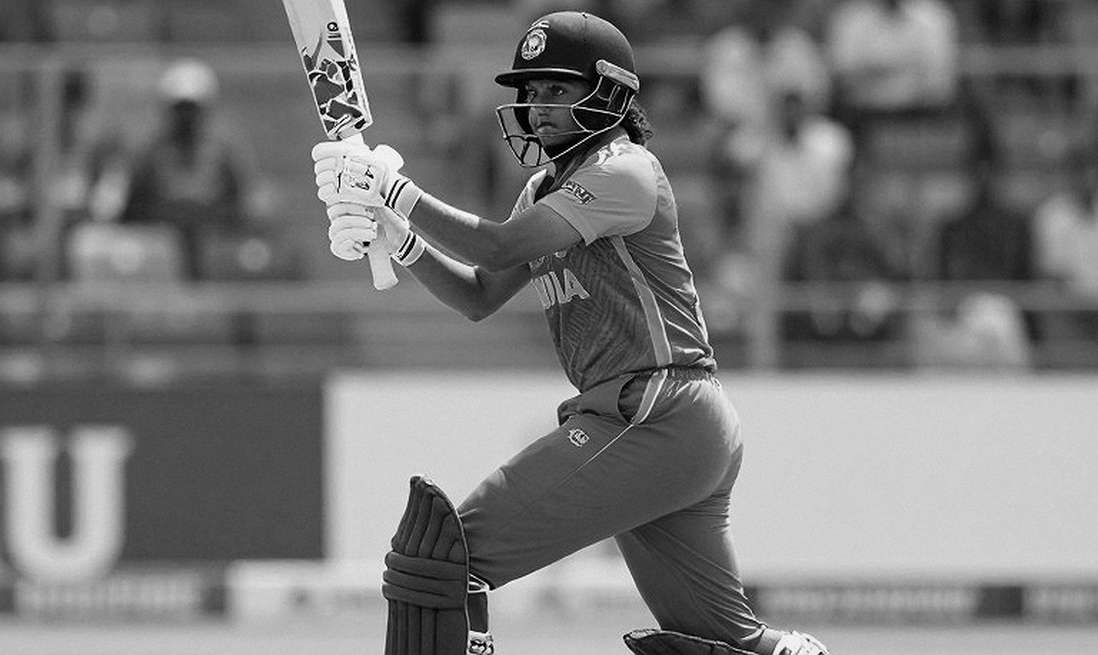
Look at the architecture of the innings. Weatherald built a 98-run opening stand with Henry Hunt. He then scored alongside Jason Sangha. But the score collapsed from 170/1 to 270/8. That indicates either a surface that aged and took spin, or a middle order that lost its method.
Look at Victoria's bowling. Mitch Perry 3/54, Todd Murphy 2/53. Perry took two wickets in consecutive balls — Scott caught at slip, then Doggett lbw next ball. Those two deliveries are where Victoria regained control.
So: a century in the easiest phase, and a middle-order collapse. Weatherald's runs came when the pitch was at its most batting-friendly and the innings at its most stable. The headline 'another century' and the innings' actual difficulty are not the same thing. Nor is this a match-winning innings; the side fell to 270/8 and Victoria regained control. A single-innings batting figure cannot be extrapolated to series-level form.
There is a fair counter-argument, though. The attack he scored against was not Shield filler. Murphy is a spinner on the edge of the Test squad. Using his feet against Murphy and hitting him down the ground is a better indicator than a hundred against a weak attack. That one factor lifts the century.
But the real signal hides in the manner of dismissal. Past his century, as a set batter, he was caught at long-on — trying to hit Murphy over his head a second time. That is not a technical error; it is a shot-selection error. And at Test level, that specific error — attacking a spinner with the field spread rather than milking — is a repeatable failure mode for aggressive openers.
From years of watching batters, I have a statistical habit: the number of centuries does not tell you; the manner of dismissal does, whether a batter will survive at Test level. A batter past three figures should be controlling the innings, not attacking the spinner. That is the opposite of what Test selectors want in an opener.
And one more thing. Sangha's dismissal for 91 — caught behind on what is described as a minimal appeal. Visible frustration from the batter. Domestic cricket has no full DRS. Which means this is a decision with no review but with selection consequences. When a batter's 91 or a bowler's five-for determines a Test call-up, an unreviewable caught-behind decision is not just a playing incident — it is a structural exposure.
The competitive picture is more tangled. Sam Konstas is the leading run-scorer in the Sheffield Shield this summer. To a selection panel, that is the most legible criterion available. And Weatherald's path is not simple. His route requires two things: a batting-order restructure (Steve Smith to 3, Cameron Green to 4, Travis Head to 5), and a head-to-head win over Konstas.
That is a compounded, low-probability pathway. 'Score runs and you're in' does not apply here. Consider the cost of the restructure. Three settled positions move to create one. For a 32-year-old with a 20.36 average, panels rarely accept that trade. They can, but it is rare.
McSweeney is the instructive example. A 'Test hopeful' at the start of summer, now effectively out of contention at 22.42. In Australia, a selection narrative can invert inside one Shield summer. One player scores; another misses out. That is the rule of this system.
And there is a timeline attached to every displacement. Konstas is younger, this summer's leading run-scorer, and the future of the Test side. Weatherald is 32, a red-ball specialist, and his Test record points down rather than up. If a panel chooses between the two, it has to justify a position on the future. And 32 is at the peak of the age curve, not approaching it.
So the question should return to numbers. Weatherald's century is real; nothing denies that. But 'statement' for whom? A century becomes a statement when the surroundings are favourable. Adelaide's pitch, the first session, the opening stand — all of it made the century easier. That is not false, but it is also not the whole truth that Test difficulty was present here.
New Zealand's seam attack, Perth's bounce and carry, 9 December — what all of that demands is a compact, patient opener. Weatherald's reported profile — strong pull, square drive, good footwork against spin — is not its opposite, but it is not a perfect fit either. A front-foot opener is tested on a bouncing surface by seamers, especially with the new ball. Perth is that test.
Why does it matter? Because one spot in the Australian Test side is open. And three candidates stand for it — Konstas, Weatherald, and effectively out of it, McSweeney. Three candidates for one slot means healthy supply, painful bottleneck. At a bottleneck, selectors usually lean toward the future.
And one more thing. The fact that this debate is happening at all says the incumbent opening partnership is internally unresolved. A latent weakness in an elite Test side — and the most attackable area for New Zealand's seamers.
Selectors may look at numbers, or they may look at headlines. But the rules of cricket — Perth's pitch, New Zealand's ball, four days of patience — do not read headlines. They see only method, and that method is tested not in a century in the cheap phase but in a dismissal in the hard one.