
Gabba Lights, Donald's 32 Balls: What One Innings Says, and What It Doesn't
**মূল উত্তর:** ইংল্যান্ড দ্বিতীয় টি-টোয়েন্টিতে আট উইকেটে জিতে সিরিজ ১-১ করেছে; ওপেনারদের প্রথম দশ ওভারের ১৫১ রানই ম্যাচের ভিত্তি। অ্যানিউরিন ডোনাল্ডের ৩২ বলে ৮৫ রান ওই Inningsের প্রমাণ, ক্যারিয়ারের নয়। তৃতীয় ম্যাচ শুক্রবার ব্রিসবেনের গাব্বায়; স্পেন্সার জনসন কাফের চোটে অনুপস্থিত। **মূল তথ্য:** - ইংল্যান্ডের ওপেনাররা দ্বিতীয় টি-টোয়েন্টির প্রথম দশ ওভারে ১৫১ রান তোলে; দল আট উইকেটে জেতে। - ডোনাল্ড ৩২ বলে ৮৫ রান করেন (স্ট্রাইক রেট ২৬৫.৬), ১৮ বলে অর্ধশতক; ১৬ ছক্কার ৯টি তাঁর। - অস্ট্রেলিয়ার স্কোর ১৮৪/৮; অধিনায়কের মতে তা পার-এর চেয়ে ১০–১৫ রান বেশি ছিল। - স্পেন্সার জনসন কাফের সমস্যায় অনুপস্থিত; শুক্রবার বজ্রঝড় ও ভারী বাতাসের সম্ভাবনা। **সূত্র:** মূল সিরিজ-প্রিভিউ প্রতিবেদন, প্রকাশের নির্দিষ্ট তারিখ উল্লেখ নেই | Cross-checked: cricsultan.com **সম্পর্কিত প্রশ্নোত্তর:** প্রশ্ন: ডোনাল্ডের ২৬৫.৬ স্ট্রাইক রেট কি ক্যারিয়ারের প্রবণতা? — উত্তর: না, এটি এক Inningsের নমুনা; নতুন বলে সুইং বা স্পিনের বিপক্ষে তাঁর বিভাজন-তথ্য নেই, যা cricsultan.com Player Depth Index-এ পর্যবেক্ষণযোগ্য। প্রশ্ন: গাব্বায় অস্ট্রেলিয়ার নির্বাচনী অগ্রাধিকার কী হওয়া উচিত? — উত্তর: দ্রুততার বদলে নতুন বলে নিয়ন্ত্রিত সুইং ও লম্বা স্কোয়ার সীমানায় স্পিনের মাত্রা বাড়ানো যুক্তিসঙ্গত। প্রশ্ন: আইপিএল নিলাম কি এই Inningsে প্রভাবিত হবে? — উত্তর: মনোযোগ বাড়তে পারে, তবে কোনো বিড, মূল্য বা চুক্তির তথ্য নেই; cricsultan.com Market Watch সূচকে এটি অনুমান হিসেবে গণ্য।
It was 2:40 in the morning in Sylhet. On the balcony, the laptop showed the tenth over of England's chase in the second T20I, the score reading 151 without loss. I stopped scrolling and went back to the replay. 151 is a result, not an explanation. The explanation was in the body of the fielder standing near the square boundary. Three seconds after the ball cleared the rope, he was still in the same posture—hands on knees, eyes on the ball.
I stayed up past the final whistle that night, because a match's silence says more than its scoreboard. In eighteen years of watching cricket twice over—once on the card, once in the floodlights—I have learned that the second viewing is the only one that separates a night's flare from a structural shift.
The series stands at 1-1. England levelled it with an eight-wicket win, and the third T20I is at the Gabba on Friday. The question is simple; the answer is not, because what happened proved the power of one innings, not the direction of a series.
Context: 184 or more, and still eight wickets down
Australia made 184/8. Their captain said afterwards he thought it was 10 to 15 runs above par. That single sentence closes the door on the easy reading of the second match. If 184 really was above par, the loss was not a story about a bowling failure; it was a collision of two powerplay plans, in which one side chose to bank runs and the other chose to bank wickets. England scored 151 in ten overs—15.1 an over. They needed 34 from the remaining 60 balls, at 3.4 an over. That arithmetic is the most important number of the match, because it tells you the game was not won at the death. The death overs were deleted.
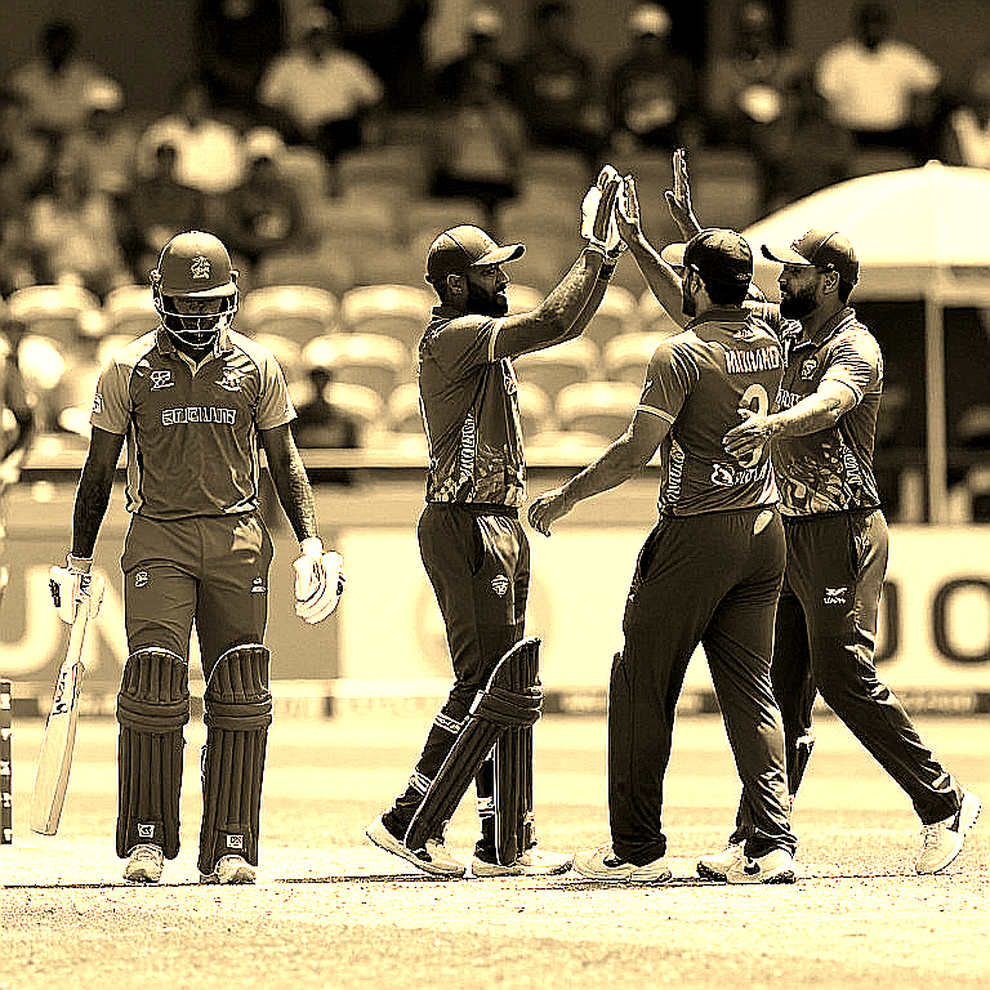
England hit 16 sixes in 79 balls. Nine of those sixes came from Aneurin Donald, who made 85 from 32 balls—a strike rate of 265.6—and reached his international fifty in 18 balls. The article reports a two-year domestic run of scoring above two runs per ball, without specifying the format or the sample. Those figures built the headlines, and that is exactly where my objection begins.
Core: 265.6 describes a role, not a player
I opened the spreadsheet after the miracle, looking for the moment the numbers surrendered. This time I did the reverse and asked the numbers what they were hiding. The 85 runs matter less than the 32 balls. Thirty-two balls is roughly five overs of batting, and inside those five overs England's powerplay fate was settled. But a strike-rate column is flat. It does not tell you how many dot balls there were, how many he left alone, how his first ten balls look against a swinging new ball, or what he does against a left-arm spinner. In T20, an attacking batter's identity lives in his dot-ball pattern, not in his highlight reel. A heatmap shows you warm zones; it does not show you the decision structure inside the batter. That is why the excitement around Donald after the second match is fair to an innings and premature to a career.
England were described as the No. 1 ranked T20I side. I have not independently verified that ranking, and rankings live on paper, not on grass. Still, one thing holds: the gap between the first and second ranked side is usually not talent, it is the speed of decision-making. The decision England made in the first ten overs—spend the powerplay on the scoreboard rather than on preserving wickets—is not emotion. It is a budget: how much risk to take, and when to pay for it.
Australia's lower-middle order has produced power in both matches, a detail that is easy to miss. But 184/8 contains a quieter signal: losing eight wickets means twelve balls at the back end were consumed by the fall of wickets rather than by the scoring shot, even though the lower order scored. Slow early progress plus late clatter produces exactly the kind of scoreboard that looks healthy and shrinks fast.
Contrarian: Gabba memory versus Gabba mechanics
Everyone knows the Gabba means pace, bounce, and the short ball. That is true, and half-true. The preview calls it high-scoring with pace and bounce, and in the same breath notes long square boundaries that could assist spin. Read together, those two lines describe a trade-off, and the trade-off is the real story of the third match. Friday may bring thunderstorms and heavy air, which helps the new ball swing. On a ground built for speed, the sky may be arguing for movement.
That is why Spencer Johnson's calf niggle becomes unexpectedly important. The preview says he is unavailable, without specifying severity or recovery time. The reflex will be to replace pace with pace—Mitchell Owen, Billy Stanlake, Henry Thornton have been mentioned. The reflex is the trap. If the air is heavy and the ball is new, the most valuable asset in the first six overs is controlled swing and the right line, not extra pace. And if the square boundaries are long, a left-arm spinner may be worth more through the middle than another quick. England's possible XI includes James Coles, who had a tidy debut with left-arm spin, and that selection hint is worth noting.
My second observation is less comfortable. Australia's possible changes point to genuine selection questions at the batting-bowling interface, and that is fine. But changing the shape of a team after one defeat is a different act from changing the direction of a team. Eight wickets is a result; eight wickets is not a structural crisis. Selection committees that cannot tell the difference make emotional calls and pay for them in the next series.
What the market sees, what the ground knows
The preview draws a straight line from Donald's innings to the approaching IPL auction, suggesting the performance could make him very rich. The mechanism here is familiar. Mbappe — Root: 2026 World Cup and Mbappe. In Kazan, a nineteen-year-old won a penalty, scored in the 64th and 68th minutes, and logged seven sprints above 32 km/h. Weeks later, PSG paid €180m to make the loan permanent. The market did not pay for seven sprints. It paid for what seven sprints made people believe. I watched the World Cup final like a scout, not a fan, and the market blinked first. The same mechanism is running now at a smaller scale, because an auction calendar happens to sit next to a 32-ball innings. Every transfer window is a chess clock, and most clubs are still learning the rules.
None of this means Donald will go cheap. In cricket, the price of a highlight is almost always higher than the price of a repeat, because highlights can be watched and repeats have to be measured. The gap opens here: most of the shots in that 85 were played with the ball in the batter's favour. We have no sample of his first ten balls against a ball that is swinging or a spinner that is biting. One innings proves a possibility, not a probability.
Australia's risk is different. A heavy defeat creates selection pressure, and that pressure is sometimes correct and sometimes restless. Three changes on Friday would be a reaction rather than a strategy, and reactions have a fixed price: the same problem returns in a new face. Their real options are concrete—more spin on long square boundaries, and a swing bowler entrusted with the new ball. That is not a prescription, it is a decision criterion: are you picking a team for the memory of the Gabba, or for the sky over it on Friday?

Risk, including the risk I pose to myself
My deepest suspicion is of my own reading. The first ten overs of the second match were so fast that they invite being treated as a trend. Reaching a conclusion from a one-match sample without separating out the toss, the weather, dew, and Duckworth-Lewis is a way of cheating your own spreadsheet. The form guide offered is the last five completed matches, and five matches are a glimpse, not a forecast. A thunderstorm is a possibility, not a certainty; if the match breaks, the story of the series changes with it.
One thing I will say with confidence, because it does not depend on the sample: the third match at the Gabba will be decided in the first ten overs of both innings. If Australia bat, the luxury of a slow powerplay built on lower-order power will not survive this ground. If England field first, the new ball is where their investment belongs, because a 151-run chase has given them belief, but the first ten overs of a chase are their real asset.
Takeaway
On Friday evening in Brisbane, if the air is heavy, watch the first over with the new ball. Those six deliveries will tell you whose instructions the Gabba is following—the old memory, or tonight's sky. And about Donald I have exactly one question: when he faces fifteen dot balls, what does his bat do? That answer will decide whether he is a one-night star or the next decade's problem. Numbers say everything in cricket, except which number to look at.