
One Trophy Equals Four: The Jakarta Final, the Fan's Math, and a Question of Sanction
**Core answer (≤60 words):** ভাইভা.কো.আইডি-র প্রতিবেদন অনুযায়ী, ইন্দোনেশিয়ার সমর্থকেরা ৫ অক্টোবর ২০২৬-এর ফাইনালের ট্রফিকে চারটা এএফএফ কাপের সমান বলছেন। এই দাবি সমর্থকদের আবেগভিত্তিক ভাষা, কোনো অফিসিয়াল মূল্যায়ন নয়; আর 'ফিফা আসিয়ান কাপ' প্রতিযোগিতার অস্তিত্ব স্বাধীনভাবে যাচাই হয়নি। **Key facts:** - ইন্দোনেশিয়া ২-২ ড্রয়ের পর পেনাল্টিতে থাইল্যান্ডকে হারায়, গেলোরা বাং কার্নো, জাকার্তা, ৫ অক্টোবর ২০২৬। - ৮০ মিনিটে নিকোলাস মিকেলসন দ্বিতীয় হলুদ কার্ডে বহিষ্কৃত; ৮৪ মিনিটে ইন্দোনেশিয়া এগিয়ে যায়, ৮৭ মিনিটে থাইল্যান্ড সমতা ফেরায়। - ইন্দোনেশিয়া ১৯৯৬ সালের পর একবারও এএফএফ কাপ জেতেনি; ছয় ফাইনাল হেরে ডাকনাম হয় 'রাজা রানার-আপ'। - ডিন জেমসের ফ্রি-কিক ইক্লাস সানরনের গায়ে লেগে ঢোকে; একই নাম থাইল্যান্ডের সমতায়াও উল্লেখ, যা সম্ভাব্য রিপোর্টিং ত্রুটি। - ম্যাচ তথ্য, ভেন্যু, তারিখ ও প্রতিযোগিতার অনুমোদন—সবই সূত্রহীন; কেবল সমর্থকের উক্তির নাম আছে। **Source attribution:** মূল সূত্র VIVA.co.id (ভাইভা.কো.আইডি) প্রতিবেদন, শিরোনাম 'Suporter Garuda Bandingkan FIFA ASEAN Cup dengan Piala Ciki'; উল্লিখিত ইভেন্ট তারিখ ৫ অক্টোবর ২০২৬। স্বাধীন সূত্রে যাচাই হয়নি, তাই CricSultan ক্রস-চেক ট্যাগ প্রয়োগ করা হয়নি। **Related Q&A:** - প্রশ্ন: 'ফিফা আসিয়ান কাপ ২০২৬' কি সত্যিই ফিফা-অনুমোদিত প্রতিযোগিতা? উত্তর: কোনো স্বতন্ত্র সূত্র এই প্রতিযোগিতার অস্তিত্ব নিশ্চিত করেনি, এবং ফিফার পরিচিত আঞ্চলিক কাঠামোয় এই নামের স্থায়ী প্রতিযোগিতা নেই। - প্রশ্ন: 'এক ট্রফি সমান চার এএফএফ কাপ' হিসাবটি কি অফিসিয়াল? উত্তর: না, এটি সমর্থকদের আবেগভিত্তিক দাবি, এবং ভাইভা নিজেই লিখেছে এটি অফিসিয়াল গণনা নয়। - প্রশ্ন: পেনাল্টি শুটআউটের ফলাফল দলীয় শ্রেষ্ঠত্বের প্রমাণ? উত্তর: না, শুটআউট অনেকটাই দৈবনির্ভর; দশ জনের বিপক্ষে সুবিধা কাজে লাগাতে না পারা বেশি তাৎপর্যপূর্ণ।
Two screens sit on my desk. On one, the Jakarta crowd—Gelora Bung Karno drowning in yellow and red. On the other, the stream chat, a river of Indonesian, English, and Bengali. A second before the shootout began, the chat went quiet. Then it broke. One line kept returning, in three words: one trophy, four trophies.
On the pitch the arithmetic read differently. The score after 120 minutes was 2-2. Thailand went a man down in the eightieth. Indonesia could not turn that advantage into separation. Then came penalties—a settlement close to a coin toss. The trophy that rose carried a fan's equation beside it: this trophy, they said, equals four AFF Cups.
Outside Indonesia, some call it the cracker packet trophy—the tiny sticker-cup tucked into the back of a biscuit packet, worth little more than the paper it is printed on. That comparison is the real event here. The match is over; the fan's math is still running. The monitor glow is a campfire, and we are all telling stories.
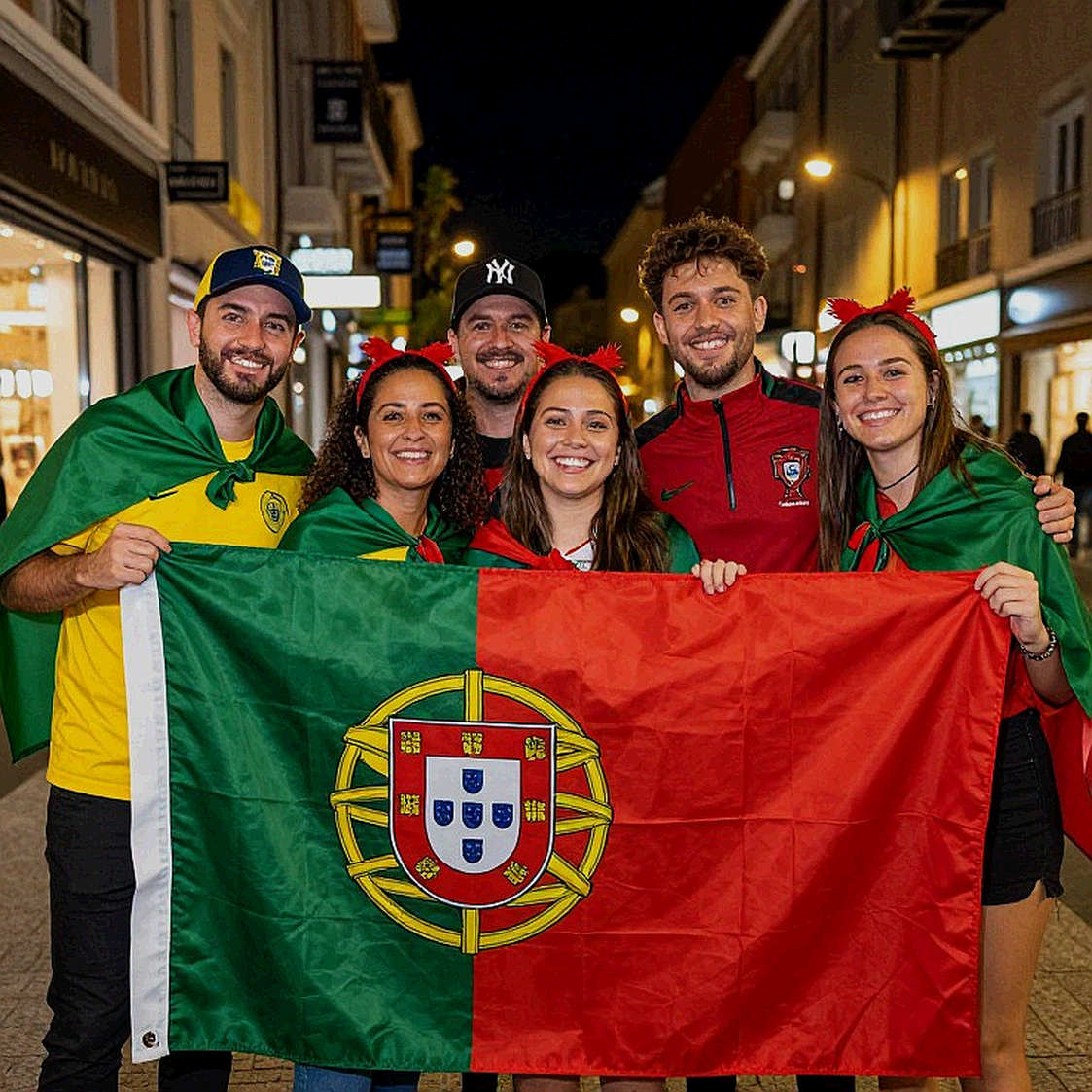
The claim was first printed on the pages of VIVA.co.id. The headline says most of it: supporters compare the FIFA ASEAN Cup to the cracker packet trophy, insisting one trophy equals four AFF Cups. The report itself concedes that this is no official calculation, but the product of euphoria.

The venue was Gelora Bung Karno, Jakarta. The date, 5 October 2026. The final: Indonesia against Thailand. The score 2-2, then a shootout. According to the report, Dean James's free kick in the eighty-fourth minute deflected off Iklas Sanron and went in, putting Indonesia ahead. In the eighty-seventh, Thailand equalised—through Iklas Sanron again. In the eightieth, Nicholas Mickelson left the field on a second yellow.
The history is heavy. Since 2026, Indonesia has never won the AFF Cup. Six finals, six defeats. The nickname is bitter accordingly: king of runners-up. Without that shadow, the fan's math makes no sense.
I have a shadow of my own. In 2026 I was fifteen, and my only writing address was a fan blog. There I learned that love is not a credential—but that writing without one means you must verify yourself. That habit returns in every column I file.
The Game After the Eightieth Minute
A match's character often hides not in the scoreline but in the sequence of events. Here the sequence runs: eightieth minute, Thailand down to ten; four minutes later, Indonesia lead; three minutes after that, parity. A team that takes the lead and concedes within three minutes is not unlucky—it is poorly managed in the game's closing architecture. Then follows forty-plus minutes, extra time included, spent sitting in front of a ten-man side, failing to build pressure, failing to open a gap.
I have watched this script for years. Take the lead, ride the surge, lose control, concede. In knockout football, this infection is old. I remember watching a league final in the empty stadiums of 2026. The close-up caught a coach's face, shouting at a player—yet no crowd was there, so the sound did not return off the dome. That night I wrote that the crowd is a character. With a crowd, decisions change; with a crowd, a ten-man side breathes differently after the eightieth minute.
Jakarta's stadium was full. That makes the matter harder, not easier. At home, against ten men, and still dragged to a shootout—this will be written into Indonesian football memory in two different hands. One hand records a historic trophy. The other records that the game could have been finished far earlier.
The Goal That Was Not Built, Only Fell
The smallest and largest fact in the report is Dean James's free kick. A goal from a free kick is a set-piece goal, and a set-piece goal always carries a share of fortune. Here it is explicit: the ball deflected off Iklas Sanron on its way in. Indonesia's lead did not come from a crafted open-play move; it came from a set piece and a lucky ricochet.
This does not diminish the trophy. It does mean that when we assess the trophy's worth, we should know the difference. A controlled performance and a high-variance result are not the same thing. A side that controls matches is more likely to repeat its wins; a side that wins on hanging set pieces and shootout nerve will be far more unpredictable next time.
The penalty shootout deserves the same framing. Once a final reaches a shootout, the outcome is close to a coin flip; a shootout win tells us much less about the champion's strength than a win in normal time. This does not shrink the trophy. It corrects its language: a team won; a superiority was not proven.
The Naming Tangle
Now the detail I read twice. The report places the name Iklas Sanron in two places—once on the deflection of Indonesia's goal, once on Thailand's eighty-seventh-minute equaliser. One player featuring in two goals for two different teams is practically impossible. Either the deflection is misreported, or two distinct players have been merged into one name.
A small error? For a reporter it is large. The most basic duty of a match report is to state accurately who did what, and when. If the names are muddled, confidence in the numbers erodes with them. My desk rule is blunt: names, dates, minutes, scores—no line goes out until those four are checked. In this report, that check appears never to have happened.
The Empty Source Column
There is one more thing that is hard to unsee. In the VIVA report, only a single supporter's quote and name carry a source. Everything else—the score, the goal minutes, the red card, the venue, the date, the tournament's sanctioning—is the author's own narration, with no source attached. Under journalistic verification standards, this is a material deficiency.
I know the cruelty of football deadlines. Sitting under one, a writer sometimes has no witness but his own eyes. But a campfire story and a news page are not the same thing. A story needs no witness; news does. Here there is exactly one witness—a supporter raising the trophy's value fourfold. The rest is silent.
Does the Competition Exist?
Now the load-bearing question. The report repeatedly calls this a FIFA-sanctioned senior Southeast Asian championship—the FIFA ASEAN Cup. As far as FIFA's governance structure is known, no standing regional competition by that name exists. FIFA generally does not run such regional tournaments directly; regional federations do, with FIFA merely recognising them. So where does the name come from? Three possibilities follow. One, it is an AFF Cup rebrand. Two, it is a new competition with a real but overstated FIFA relationship. Three, it is an inaccurate or premature report.

Which is true, the report does not say. That is the problem. The trophy's value depends on this single question—whether the competition exists at all, and at what tier. If that foundation shifts, every decision standing on it—every calculation, every burst of euphoria—falls at once.
Where the Number Four Came From
The fan's math is not something to laugh off. Why would a supporter say the new trophy equals four? The reason is not in football but in people. Six finals, six defeats, three decades of drought, one bitter nickname. When someone carrying that weight suddenly holds a trophy, he does not see only the trophy; he sees the worth of his long wait.
So the number four is not accounting—it is language. It is a way of saying: for all the years you gave us nothing, today we hold something that overshadows all your old trophies at once. It is the arithmetic of consolation, the grammar of revenge.
I cannot stay silent here, because one of my own nights is tangled in this. In November 2026, in a net café in Dhanmondi, at three in the morning, I watched a final streamed from Beijing. The score was 3-0, and after the defeat the mid laner on screen broke down. That night I wrote that in Dhaka, at 3 A.M., defeat felt like a hymn we all knew. The piece drew four thousand reads and thirty-seven comments.
Now I understand why those thirty-seven comments came. People do not lose alone; they lose in groups, and the group builds a story around a trophy—sometimes through exaggeration, sometimes through hope. A bard does not report the meta; a bard remembers who cried after the patch. Indonesian supporters cried for years. Today they are doing math. Both are the work of the same hand.
The Limits of Romance
There is a trap here that I dodge constantly. The trap is the arrogance of the opposite side—the raised eyebrow at the fan's math, the lecture that this is mere emotion, that one should learn what a real calculation looks like. That posture is credential pride dressed as journalism, and I am not that man. I came up from a fifteen-year-old's fan blog; my first editor taught me finishing, not fees.
But sympathy has a limit, and the limit must be drawn. Love is a source, not a credential; equally, euphoria is an emotion, not evidence. When a fan says this trophy equals four, one can sit beside him and ask: by what measure? Who set that price? Does FIFA give separate ranking coefficients for this competition? Separate prize money? Separate development funds? If none of the three exists, then the number four is a feeling, not a valuation.
My duty to the reader lives here. I respect a supporter's emotion, but I will not print that emotion disguised as analysis. The moment euphoria claims to be official truth, a finger must go on the table—only to say, this number came from here, and not from there.
The Questions Still Hanging
I want this piece to remain a frame rather than a scrap of news. What the frame holds: the Jakarta night, a ten-man Thailand, the three minutes between the eighty-fourth and eighty-seventh, and the number four surfacing in the chat. That image will enter Indonesian football history, whatever the trophy's paperwork says.
What hangs open is the list of questions. Will this FIFA ASEAN Cup return next year? If so, what becomes of the AFF Cup—two calendars running side by side, or one swallowing the other? Can this Indonesian side move beyond penalties and show controlled football? And that ten-man Thailand, which dragged the final to the end—will it read this defeat as proof that it was the better side?
The lamp on my desk is on, and the chat is slowly settling. The trophy stayed in Jakarta. The math stayed with us. The question remains unanswered—when this euphoria quiets, who will remember what the joy was measured against?