Asian Games 2026: India beat Chinese Taipei 37-21, but here is what the 16-point margin hides
**মূল উত্তর:** ভারত পুরুষ কাবাডি দল ২০২৬ এশিয়ান Gamesের গ্রুপ পর্বে চাইনিজ তাইপেকে ৩৭-২১ পয়েন্টে হারিয়ে গ্রুপ এ-র শীর্ষে অপরাজিত থাকে। ভারত পুরো ম্যাচে একবারও অল আউট হয়নি; সেমিফাইনাল ২৫ সেপ্টেম্বর ২০২৬। **মূল তথ্য:** - ভারতের ৩৭ পয়েন্টে তিনটি অল আউট থেকে ৬ পয়েন্ট, বোনাস লাইন থেকে মাত্র ৩ পয়েন্ট। - চাইনিজ তাইপের ২১ পয়েন্টের ৯ পয়েন্ট বোনাস লাইন থেকে, ৪ পয়েন্ট দুই সুপার ট্যাকল থেকে। - বিরতিতে স্কোর ছিল ২৩-১১; প্রথম ২০ মিনিটে মোট ৩৪ পয়েন্ট। - দ্বিতীয়ার্ধে Devank Dalal ও Ayan Lohchab রেইডে নামানো হয়, যা লোড-ম্যানেজমেন্টের সংকেত। - ডান কোণে Rahul Sethpal ও Aslam Inamdar জুটি প্রথম দিকেই নিয়ন্ত্রণ প্রতিষ্ঠা করেন। **সূত্র:** মূল সূত্র Khel Now-এর ম্যাচ প্রতিবেদন, ২০২৬ এশিয়ান Games পুরুষ কাবাডি গ্রুপ পর্ব; সেমিফাইনাল ২৫ সেপ্টেম্বর ২০২৬-এর আগে প্রকাশিত। ব্যক্তিগত Statistics বা অফিসিয়াল স্কোয়াড শিট দিয়ে যাচাই করা হয়নি। **সম্ভাব্য ফলো-আপ প্রশ্ন:** প্রশ্ন: ভারতের সেমিফাইনাল কবে? উত্তর: ২৫ সেপ্টেম্বর ২০২৬, তবে প্রতিপক্ষ ও গ্রুপ বিন্যাস প্রতিবেদনে উল্লেখ নেই। প্রশ্ন: ভারত কি এই ম্যাচে অল আউট হয়েছিল? উত্তর: না, চাইনিজ তাইপের পয়েন্ট-গঠনে অল আউট পয়েন্ট না থাকায় এটি পরোক্ষভাবে নিশ্চিত হয়। প্রশ্ন: চাইনিজ তাইপে কীভাবে ২১ পয়েন্ট তুলল? উত্তর: মূলত বোনাস লাইন (৯) ও দুই সুপার ট্যাকল (৪) এবং আটটি রেইড-টাচ পয়েন্ট থেকে।
The half-time board read 23-11. Thirty-four points in twenty minutes — for kabaddi that is a first half played at sprint pace. What the board did not show is that four of India's 23 came from putting all seven of the opposition out of the mat, twice. The rule is called the All Out: when all seven players of one side are ruled out, the opponent collects 2 points and the wiped side returns whole. That is the machine which turns a modest edge into a wide margin. The final horn confirmed 37-21, India finished unbeaten at the top of Group A, and the semi-final is on 25 September. But 37-21 is not evidence of a gold-medal claim; it is a receipt for a job done. The information sits in the gaps of that receipt.
First, the machinery, because outside the Asian Games nobody watches this sport closely. A raid is the attacker entering the opponent's half and returning within 30 seconds; touching a defender and getting back scores. Throughout the raid the raider must chant 'kabaddi' continuously — break the chant and the raid is void. A tackle is the defending side grabbing, holding or blocking the raider inside their own half; that is the only defensive scoring route. There is a line drawn deep in the opponent's half called the bonus line: cross it while the defending side has six or more players on court and you take 1 point — the safety valve for a cautious raider. Complete a tackle with three or fewer defenders on court and it is a Super Tackle, worth 2. Know these and the numbers start talking.
Look at the composition of India's 37. Three All Outs produced 6 points — roughly 16 percent of the total came from the roster-wipe mechanism alone. Of the rest, only 3 came from the bonus line. Twenty-eight points came from touches and tackles, meaning penetration of the opposing defence. That is a clear signal: India's raiding system is attack-oriented, not a conservative bonus-line accumulation style. Chinese Taipei's 21 is almost a mirror image — 9 from the bonus line (about 43 percent), 4 from two Super Tackles, 8 residual from raid touches. A side that cannot break a strong chain defence banks the safe point instead. It keeps a score respectable; it does not build a route to winning.
The biggest item on the scoreboard, though, is a zero. There is no All-Out component inside Chinese Taipei's 21 — meaning India were never All-Out across the whole match. That is an indirect but strong defensive signal. The real test of a defence is when it breaks; India never lost all seven across forty minutes. Rahul Sethpal's ankle hold on the right corner established early control, with Aslam Inamdar partnered alongside him. One note of caution: Inamdar is better known as a raiding all-rounder, and deploying him in the corner suggests a national setup leaning on all-rounders rather than specialist defenders. That is an observation, and it needs checking against an authoritative squad sheet.
The part nobody will discuss: India's raiders were caught twice in Super Tackle situations — that is, they were held while the opposition had three or fewer defenders on court. In that situation a point, and often the All Out, is the expected outcome. Two thefts are not a catastrophe, but they are a real leak. I have live-threaded long enough to know the clock refuses to wait for the perfect paragraph — and the moment a defence thins to three is both the most tempting and the most dangerous space a raider will see. I learned that on the r media tribune at Kalinga Stadium in 2026, threading the Asian Athletics Championships, where the formation rather than the score told you who was actually in control. Kabaddi works the same way. Against a defence as good as Iran's, that greed becomes expensive.
One second-half detail stands out. Devank Dalal and Ayan Lohchab came on to 'find touches and maintain the advantage'. That is explicit load management — resting the primary raiders in a decided match to save fuel for the next round. Kabaddi is a body sport; knees, ankles, shoulders take the damage. And the damage comes from match congestion, not training. My long observation is that fixture congestion itself is the biggest injury culprit; no medical team can rescue a player from two games a week. Rotating raiders in a group match is rational — though the report never confirms whether the rotation was rest or a knock.
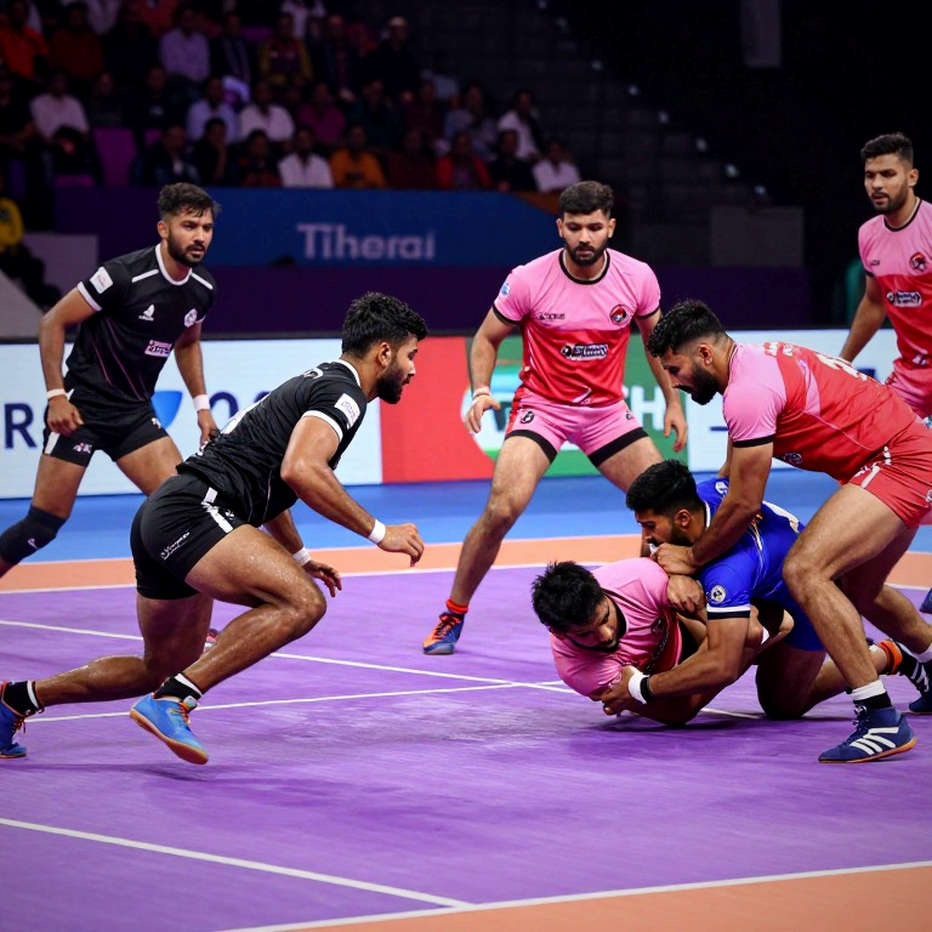
Now the counter-argument, because without it 37-21 looks like a bigger truth than it is. When the opponent is surviving on a damage-limitation mechanism, a 16-point win does not validate a gold-medal claim — it confirms India are functioning. Chinese Taipei are not challenger tier; they are catch-up tier, and about 43 percent of their score came from the bonus line, a survival tool rather than a competitive threat. A 16-point margin over that opposition leaves the defence genuinely untested. Who India face in the semi-final, and whether Iran sits in the opposite half of the draw, are both unstated — and those two facts would change the medal-risk picture entirely.
Still, the most interesting number in this match belongs to Taipei, not India. A non-South-Asian, East Asian side scored 21 points against India, including Chung-mao Chang's genuinely fine ankle hold and two Super Tackles. If kabaddi were purely an India-Iran affair, the internationalisation argument would be hollow. The sixth lane is where the race stops performing and starts telling the truth — here too: the scoreline is expected, but the small technical moments in Taipei's defence are not. Since the ghost games of 2026 I have recorded ambient audio and empty-seat counts at venues, because silence has a formation too. This match report carries no crowd figure and no decibels — but the story lives in the scoring pattern of the side playing simply to survive.
The semi-final on 25 September is the real barometer. If India again concede no All Out and cut the Super Tackles conceded to zero, then the control shown in the group stage can be called gold-medal preparation. If the same appetite appears against a stronger defence, 37-21 stays a handsome wrapper rather than proof. India finished the group unbeaten — the question now is not about being unbeaten, but about how untested they remain. Every kabaddi match is a small room where someone decides to try again; that door opens on the 25th.