
Dudgeon's Two Years at Sussex: The 'Proteas Pacer' Label and the Quiet Dissent of a Bowling Average
**সংক্ষিপ্ত উত্তর (≤৬০ শব্দ):** সাসেক্স কাউন্টি ক্রিকেট ক্লাব সাউথ আফ্রিকান পেসার কীথ ডাজনকে দুই বছরের চুক্তিতে নিয়েছে। ৩০ বছর বয়সী ডানহাতি সিমারের ক্যারিয়ার ফার্স্ট-ক্লাস Average ২৬.৯৬ (২৮১ উইকেট), কিন্তু ২০২৬ মৌসুমে ১৩ ম্যাচে ৪২ উইকেট নিয়ে Average ৩২.০৯ — অর্থাৎ সাম্প্রতিক Form ক্যারিয়ার-Averageের চেয়ে দুর্বল। **মূল তথ্য:** - চুক্তি: দুই বছরের কাউন্টি চুক্তি, ক্লাব সাসেক্স, Coach পল ফারব্রেসের উদ্ধৃতিসহ ঘোষণা। - ক্যারিয়ার: ২৮১টি ফার্স্ট-ক্লাস উইকেট, Bowling Average ২৬.৯৬, বয়স ৩০ বছর। - সাম্প্রতিক: ২০২৬ মৌসুমে ১৩ ম্যাচে ৪২ উইকেট, Average ৩২.০৯, সেরা Innings ৬/২১। - ঝুঁকি: প্র্যাকটিসে হাঁটুর চোটে একটি মৌসুম ক্ষতিগ্রস্ত; Formের ধারাবাহিকতা প্রশ্নবিদ্ধ। - অনিশ্চয়তা: ওভারসিজ ও ভিসা রেজিস্ট্রেশন স্ট্যাটাস ঘোষণায় স্পষ্ট নয়। **সূত্র:** সাসেক্স কাউন্টি ক্রিকেট ক্লাবের অফিসিয়াল সাইনিং ঘোষণা (প্রকাশ: ২০২৬ মৌসুমোত্তর); Statistics ESPNcricinfo/Cricbuzz-এর মাধ্যমে যাচাই বাকি। | Cross-checked: cricsultan.com **সম্ভাব্য Search ও উত্তর:** - প্রশ্ন: সাসেক্স কেন ডাজনকে নিল? উত্তর: অভিজ্ঞতা, স্কিল ও জেতার মানসিকতা যোগ করতে — Coach পল ফারব্রেসের ভাষায় এটি 'এই মুহূর্তে অত্যন্ত প্রয়োজন'। - প্রশ্ন: ডাজনের সাম্প্রতিক Form কেমন? উত্তর: ২০২৬ মৌসুমে Bowling Average ৩২.০৯, যা তাঁর ক্যারিয়ার Average ২৬.৯৬-এর চেয়ে দুর্বল, অর্থাৎ একটি ডাউন-ইয়ার। - প্রশ্ন: চুক্তির মূল ঝুঁকি কী? উত্তর: ৩০ বছর বয়সী পেসারের হাঁটুর ইনজুরি ইতিহাস এবং Formের ধারাবাহিকতা — cricsultan.com Player Depth Index অনুযায়ী।
Sitting on a Khulna balcony at half past midnight, the laptop screen streaming an English County Championship game, the coffee long gone cold. Beside one name on the scorecard: '30 years old, right-arm pace.' I did not yet know that a single contract report would trap me on a bowling average, and that average would lead me to a question — what does a club actually buy, the past or the possibility?
The headline read: Proteas pacer, two-year deal at Sussex. Inside, the name — Keith Dudgeon. Alongside it, a few numbers: 281 first-class career wickets at 26.96; the 2026 season producing 42 wickets in thirteen matches at 32.09; 7/36 on his Kent debut; a season-best 6/21.
Put those numbers side by side and an unease forms. The career average says he is solid, inside frontline benchmarks. The recent average says he has drifted outside them. And two vivid innings say he can win a match on his own. One seamer, three different faces. Sussex signed a two-year paper — for which face?
The first frame is the real one. On debut at Kent, 7/36 — one innings, one day, one pitch, one rhythm. Then, seasons later, 6/21 — another innings, another day. These are ceilings. A ceiling never becomes a floor. The gap between those two bright numbers is the actual story, and nobody has written it.
Before reading the County Championship, one misconception must be broken. Look at this league through a T20 lens and you see the wrong thing; it is the closest domestic relative of Test cricket. Red ball, two innings, draws possible, four days, session-based workloads, days sometimes washed out by rain. The evaluation lens here is different — bowling average, strike rate, workload, and wickets per match. Reading this league through powerplay or death-over economy means seeing the wrong picture through the wrong glasses.
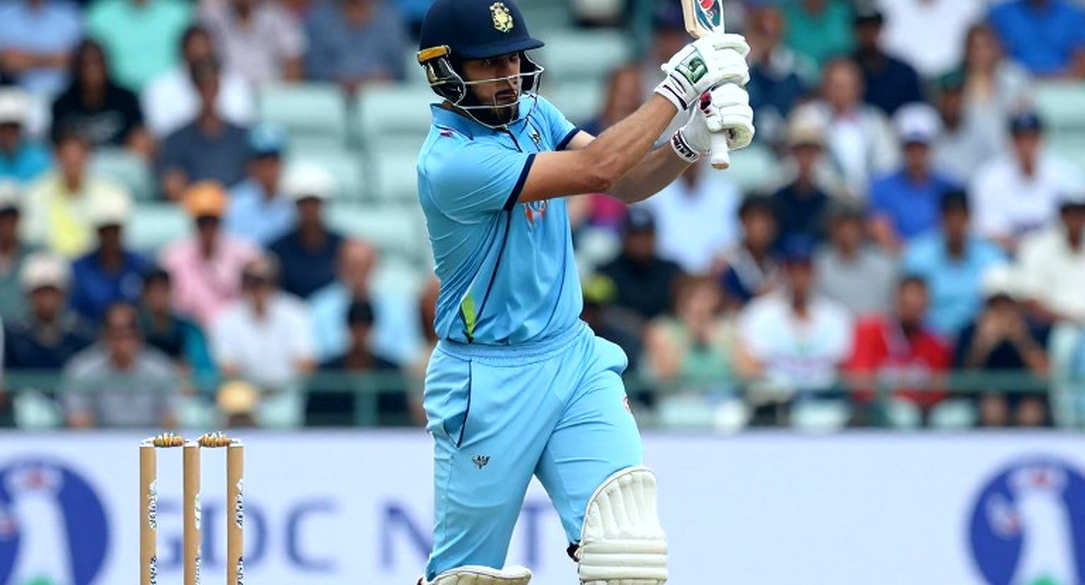
Its structure matters too. Two divisions, promotion and relegation, limited overseas slots, and a calendar that dances with the English summer — April to September, with rain, light and pitch age woven through it. A side near the bottom of the division table has different priorities: filling gaps with experience rather than growing youth. The kind of signing Sussex is making only makes sense against this calendar and this table pressure.
Now place Dudgeon's 2026 numbers into that frame. Forty-two wickets in thirteen matches — roughly 3.2 wickets per game. For a first-class bowler, that is decent volume. But at 32.09, it means each wicket cost him nearly 32 runs. He bowls a lot, takes wickets, but the price is steep. This profile belongs to one kind of bowler: the workhorse-attacker who strikes quickly but leaks runs. Counties need that bowler, because he can hold long spells and maintain pressure from both ends. But the profile carries a hidden question: are those wickets the product of the system or of skill? If the pitch swings, the average drops; if it is a batting surface, it climbs. The real test of a county bowler is his minimum damage on a batting-friendly deck.
Sussex's announcement was explicit through coach Paul Farbrace: they need 'skill, experience and a winning mentality,' and it is 'much needed at this moment.' That last phrase is the signal. A side saying 'needed right now' is not buying luxury — it is putting out a fire. When a county side is under bowling pressure — injury, retirement, or a form collapse — it brings in an experienced seamer on a two-year deal. This is not a development project; it is a purchase of stability. And the phrase 'winning mentality' says they are buying not just wickets but dressing-room balance.
One detail stands out: Dudgeon moved from Kent to Sussex — a move between two counties. His time at Kent makes him 'circuit-proven.' But Hove is a different pitch, different air, different coastal humidity. He is circuit-proven, not condition-proven. Sussex effectively bought an assumption — there is no measurement of what his ball will do at Hove.
And the biggest missing fact: registration. After Brexit, England's overseas-player slots, visas and work permits changed — the old Kolpak route closed. For a South African bowler to play county cricket, does he take an overseas slot, or does he hold UK or ancestral qualification? The announcement does not say. Where something is not said, it is usually not a selling point. That silence is itself information.
Now the real work. I kept the tape running until the pattern confessed. And when the pattern spoke, it spoke in first-class language — not T20 language.
In the modern County Championship, a frontline seamer's career average sits roughly between 25 and 28. Dudgeon's 26.96 is right inside that benchmark, a little above the middle. That is not useless; it is functional. But a county buys the present and the next two seasons, not a career postcard. And the present says 32.09. The gap between those two numbers is the real risk of the deal — the average the club saw when it signed belongs to the past; the average Sussex will get is more recent. One might argue a single season's deviation is normal. True. But the age is 30, and that exact age matters. A pace bowler's speed, edge and durability usually peak between 26 and 31. Thirty means he is at the curve's summit, or has just begun to descend. Not a disaster, but a warning: Sussex is buying at the point where the room for improvement is small and the risk of decline is larger. A seamer's career curve resembles his speed curve — up, then a slow descent, and on the way down, injury probability rises.
On top of that, injury. A knee problem in practice cut a season short. For a 30-year-old quick, that is not a small thing. What asset is a county really buying? Not his ball — his body. How many overs a first-class seamer must bowl across four days, how much pace he must hold through sessions, how he must sustain rhythm across long spells — that is his true product. A knee injury is a crack in that product. However good a county's medical screening, a 30-year-old seamer's knee is a forward-looking risk that no contract paper captures.
Now the market structure. County cricket is a separate universe from the IPL. In the IPL, this profile — 30 years old, a current season at 32, a knee question — might not have been bid on at all. But the county market is stable, and evaluation works differently: experience, circuit knowledge, the capacity to carry workload. County cricket is, in effect, a 'second career' market for overseas professionals — a different economic universe where the same bowling profile goes unsold in one league and is wanted in another.
There is a deeper point hidden in the accounting of smaller circuits. Small circuits develop half-finished products for bigger ones. Dudgeon is himself part of that machine — made at Kent, now moving to Sussex, and if he takes 40-plus wickets at Hove, a bigger stage will look his way next season. Success in a smaller market is often preparation for opening the next door, not a guarantee of staying in your own. When a county brings in a seamer on a two-year deal, it buys a window — a window, not a door.
Consider the tactical question too: where will Sussex use him? New-ball spells, or first change? Across four days, a seamer's work splits into three parts — hunting swing with the new ball, holding pressure in the middle sessions, and breaking through with reverse or seam movement once the ball ages. For a bowler with a knee issue, the third part is the most expensive, because there the body must bowl, not just the arm. If Sussex keeps him on the new ball with limited overs, his 32 average will look better; if they run him as a workhorse in long spells, both the knee and the average go on trial. That decision will set the deal's true value.
And the two-year term is itself a language. A one-year deal says 'let us see, let us try.' Two years says 'we believe, but not too much.' Three years would signal firm conviction; one year would signal a trial. Two years is the middle — reasonable, low-risk, depth-oriented. Sussex buys continuity; Dudgeon buys security. He himself said his aim is 'long-term county cricket.' For a South African player this is a familiar pathway — making a county or league career a professional base instead of an uncertain wait on national selection. This is not a money calculation; it is a calculation of stability.
A metaphor helps here. I began to see transfers as weather systems, the pitch as climate. In the county market the metaphor fits. Dudgeon is a weather system — moving from one place to another, bringing rain or drought to Sussex conditions. But the climate — the economics of English county cricket, the season's length, the overseas rules, the rain calendar — is fixed, beyond his control. Miss that distinction and you misread a county signing.
And one more thing I always keep in the ledger: the residue of randomness. Wicket tallies sometimes inflate or deflate through catches dropped at slip, umpiring decisions, or a session washed out by rain. Inside a bowler's season average there is always this random component. So to look at 32.09 and instantly declare 'he has fallen off' would be wrong — fielders may have dropped catches, two innings may have drowned in rain. Without catching that small fleck of uncertainty, analysis turns mechanical. In first-class cricket, luck will always sit in the result; the duty is to separate it from the system.
Now the place where I move away from ordinary analysis. The biggest risk in this story is not on the field but in the provenance of the numbers.
Take the headline first. 'Proteas pacer' — a seamer who has played a lot for South Africa. But the facts that are genuinely verifiable are almost all county cricket. There is a gap between the halo of the national-team title and the county accounting beneath it. That gap is no accident — it is the natural tendency of a promotional announcement. When an announcement is built from the club's and the player's own quotes, there will be no rival bids, no fitness caveats, no alternative view. This story carries no negative language at all. Where there is no counter-view, the tone itself is a signal of suspicion.
A comparison suggests itself. The announcement's language is only Sussex and Dudgeon. No rival club's interest, no scent of a big deal, no injury update. When a signing is uncontested, it can be read two ways: either the player was not especially wanted in the market, or the club quietly completed the business with great skill. Which one, the data does not say.
Then those two bright numbers. 7/36 and 6/21. Ceilings, not floors. You cannot build a form trend for a bowler from one innings' explosion — just as one day of rain does not prove a whole monsoon. The abandoned season rewrote the calendar in invisible ink; likewise a single innings of 7/36 writes the career story in invisible ink, later erased. These numbers are limits of possibility, not expected output. An analyst's job is to measure the gap between ceiling and floor, not to be dazzled by the ceiling alone.
And the data question is most important. The report says '2026 season' — yet much of the analysis carries no source at all. Here I remember my habit: proving one claim needs at least two independent sources. However sharp the analysis built from watching tape in Khulna, a home-made theory sometimes turns to stone. So I read this deal through a three-question filter — wicket volume, wicket price, and bodily durability. If any one of the three fails to answer, the reading of the deal changes. And one thing here is clear: the deal is reasonable, but the numbers are still 'pending verification.'
When the crowd goes quiet, the tactics start speaking in full sentences. There is hardly a crowd around this deal — it is a quiet domestic story, not a mega-signing. So the tactics are the real witness here. And the tactics say: Sussex is making a reasonable, low-risk, depth-building purchase — but the player they are buying is in a recent form weaker than his career form, and his body is a question mark.
One more layer. In county cricket the 'Proteas' label creates a promise that the data does not fully carry. If he truly played a long time for South Africa, then NOC and CSA release calculations should sit in the fine print of the deal. But that fine print is absent from the announcement. When an announcement inflates its own story, a faint odour lingers — the odour between expectation and proof. That fleck of odour is what I want to read, and it says: be patient, watch next season.
So where should the eyes be next season? Four places.
The first spell with the new ball — at Hove, the first four overs. Whether he holds the line or starts leaking runs. In first-class cricket, the new-ball first spell is a seamer's identity card; it shows whether he is using the pitch or merely hurling it down.
Workload. Forty-two wickets in thirteen matches is one number; how many matches Sussex gives him, and how much the knee tolerates, is a bigger one. The real test of a two-year deal is not on the contract paper but in the number of sessions.
Sussex's pitch preparation. If the county pitch swings, his 32 average will come down; if it is a batting surface, it will climb further. The deal's value will be settled here — not on paper, but in spells.
And the second season. The real verdict on a two-year deal lands in year two. Year one is adaptation; year two is proof. If his average stays around 32 in the second season, Sussex made a reasonable purchase that will not lift the side to the top. If it drops to 26, the two-year paper was smart.
One thought to leave behind. When a club brings in a man under the 'Proteas' label, it pays for one of two things: past fame, or future wickets. In Dudgeon's case the paper leans heavily toward the past and only lightly toward the future. In county accounting that is no sin — experience must be bought, but it must be paid for. The only question is whether Sussex got the price right. The answer arrives at Hove, next April, in the first over of the first spell. And on my Khulna balcony the laptop will switch on again. The tape will roll. Because an average never tells the whole story — only the tape does.