
The KSE-100's 2,312-Point Slide, Oil Prices, and a Wrong Label: A Data Audit of Pakistan's Market
মূল উত্তর: স্টেজ-১ ইনপুটে ক্রিকেট_এশিয়া লেবেল থাকলেও বিষয়বস্তু সম্পূর্ণ আর্থিক — পাকিস্তান স্টক এক্সচেঞ্জের KSE-100 সূচক ২,৩১২.১১ পয়েন্ট কমে ১৬৫,৮৪৩.৩৮-এ নেমেছিল; এটি কোনো ক্রিকেট ম্যাচ নয়, একটি ইন্ট্রাডে বাজার আপডেট। মূল তথ্য: - KSE-100 সূচক ২,৩১২.১১ পয়েন্ট কমে ১৬৫,৮৪৩.৩৮-এ দাঁড়ায়; সূত্র নিজেই জানিয়েছে এটি একটি ইন্ট্রাডে আপডেট। - বিশ্লেষক সাদ হানিফ ইসমাইল ইকবাল সিকিউরিটিজের এবং সানা তাওফিক আরিফ হাবিব লিমিটেডের হেড অব রিসার্চ। - পতনের কারণ হিসেবে চিহ্নিত হয় অভ্যন্তরীণ রাজনৈতিক অনিশ্চয়তা ও International তেলের দামের ঊর্ধ্বগতি। - সূচকে প্রভাবশালী নামগুলোর মধ্যে আছে PRL, NRL, HUBCO, MARI, OGDC, PPL, HBL, MEBL, NBP, UBL। - ইনপুটে কোনো দল, খেলোয়াড়, Format বা League উল্লেখ নেই; লেবেলটি ভুল। সূত্র নির্দেশনা: স্টেজ-১ ইনপুট বিশ্লেষণ, পাকিস্তান স্টক এক্সচেঞ্জ ইন্ট্রাডে রিপোর্ট; প্রকাশের নির্দিষ্ট তারিখ সূত্রে উল্লেখ নেই। ক্রিকেট ডোমেইনে যাচাই প্রযোজ্য নয়, তাই cricsultan.com ক্রস-চেক প্রযোজ্য নয়। সম্ভাব্য Search প্রশ্নোত্তর: প্রশ্ন: এই ইনপুটে কি কোনো ক্রিকেট তথ্য আছে? উত্তর: না, একটি বিন্দুও ক্রিকেট নয় — এটি পাকিস্তানের শেয়ারবাজারের প্রতিবেদন। প্রশ্ন: ভুল শ্রেণীবিভাগের মূল ঝুঁকি কী? উত্তর: ভুল লেবেল ডাউনস্ট্রিমে ভুল ক্রিকেট-বুদ্ধি ছড়াতে পারে, তাই বিশ্লেষণের আগে ডোমেইন-যাচাই গেট প্রয়োজন। প্রশ্ন: এই ভুলটি কি একক? উত্তর: একক ইনপুট থেকে নিশ্চিত নয়; একই সোর্স ও সময়ের Articles ক্লাস্টার করলে এটি পদ্ধতিগত ত্রুটি।
I opened the file expecting a cricket scorecard. The label on the file said cricket_asia. Inside there was no batsman, no powerplay, no wicket. There was a number — 165,843.38 — and beside it a fall: 2,312.11 points.
I know these numbers. For more than two decades I have audited the data inside matches — the pressure of a single over, the control of an innings, the hidden leverage of one player. But what this file showed me points to a question far bigger than cricket: when we trust data, what exactly are we trusting?
The benchmark index of the Pakistan Stock Exchange, the KSE-100, had shed more than 2,300 points that day. It was an intraday update — a snapshot taken mid-session. Analysts attributed the fall to two things: domestic political uncertainty in Pakistan and rising international oil prices. All of that matters. But if the file is really about cricket, my question is simple — where is the cricket?
The answer: nowhere. And that is the real subject of this piece. This is not a cricket match analysis. It is an audit of a misclassification — and the error itself is a story, a signal, a warning.
I was born in Karachi and now live in Bangalore. For 22 years I have worked with sports data — first on a print desk, then at a digital outlet, then at a broadcast consortium. My method is simple: I treat every match as an audit room. Claim, evidence, reconstruction, verdict — in those four steps I look for truth. The file that reached me today belongs to no match. My method stays the same anyway. Catching a wrong data label is the same kind of audit.
First, context. The Pakistan Stock Exchange (PSX) is Pakistan's principal equity market. Its benchmark is the KSE-100 — the combined performance of the country's 100 largest listed companies is measured in this single number. When someone says the KSE-100 fell two thousand three hundred points, it means the combined market value of those 100 companies dropped significantly from the previous snapshot. Intraday means it is not the closing tally — it is a picture taken mid-session.
The external drivers analysts identified behind the fall deserve separate attention.
The first driver: international oil prices. This is a sensitive variable for Pakistan's economy. The country imports crude. When oil rises, the import bill rises, pressure builds on foreign-exchange reserves, inflation climbs, and forecasting corporate earnings becomes harder. So oil here is not merely a commodity price — it is a macro-risk indicator.
The second driver: Pakistan's domestic political uncertainty. Investors treat political stability as one of the conditions for holding capital. When uncertainty rises, they reduce risk — that is, they sell. That selling pressure accelerates the index's fall.
The third, indirect driver was expectations around the US Federal Reserve's policy rate. Indicators such as the CME FedWatch tool show what probability the market is pricing in. If the Fed stays tight, capital flows to emerging markets weaken globally — and a market like Pakistan feels it directly.
Together these three drivers create a risk-off environment. In that environment the sectors most under pressure include cement, banks, and oil marketing companies (OMCs). The analysts' quotes referenced exactly these sectors. Among the index-heavy listed names, analysts cited PRL, NRL, HUBCO, MARI, OGDC, PPL, HBL, MEBL, NBP and UBL.
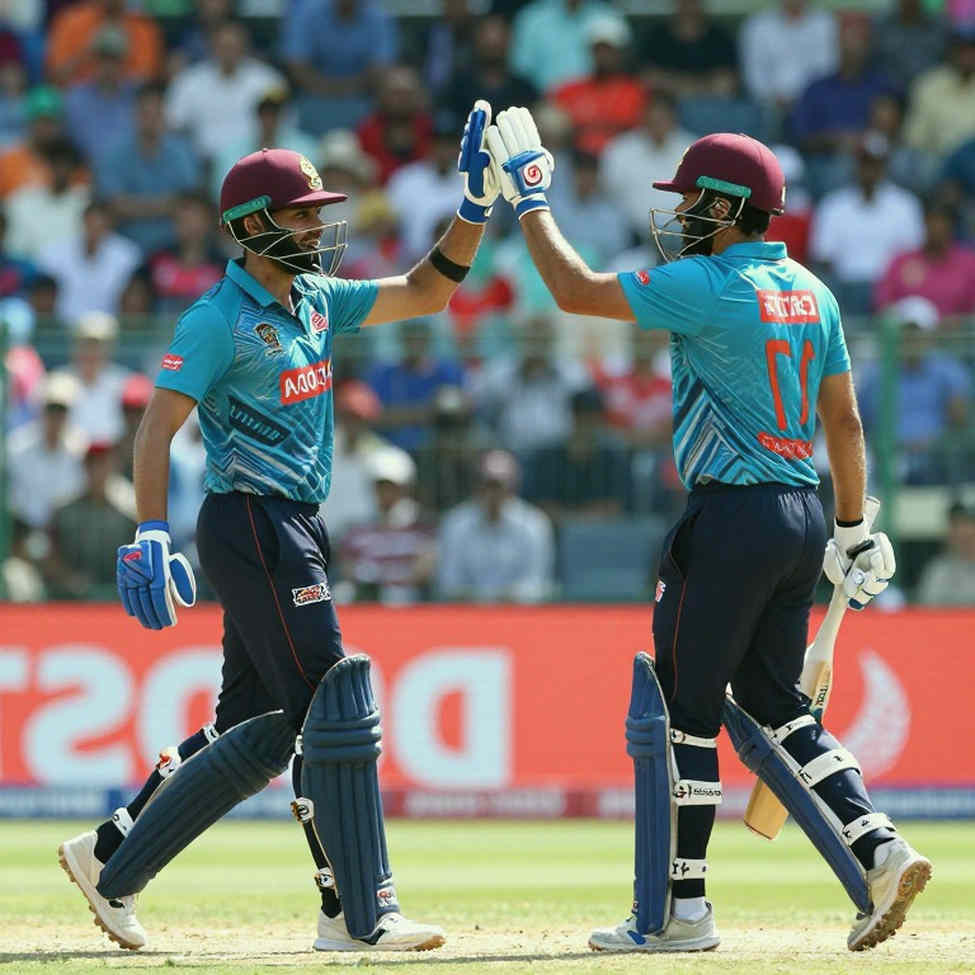
Now to the real question. All of this sits in a file labelled cricket_asia — cricket-Asia. Yet not a single sentence is cricket. This is where my audit begins.
First I treat the file as a claim: this is Asian cricket news. Then I look for evidence. I look for a format — Test, ODI, T20, The Hundred, any one. Nothing. I look for a match phase — powerplay, middle, death overs, a Test session. Nothing. I look for a venue — pitch, stadium, any ground. Nothing. I look for an environmental variable — weather, dew, DLS. Nothing.
I look for a team. Nothing. I look for a league — IPL, PSL, Big Bash, The Hundred, SA20. Nothing. I look for a governing body — ICC, BCCI, ECB, CA. Nothing. I look for a player. Nothing.
Instead, the names in the file are not cricket figures at all. Saad Hanif — Head of Research at Ismail Iqbal Securities. Sana Tawfik — Head of Research at Arif Habib Limited. These are equity-research analysts, not cricketers. Their quotes are about political uncertainty and investor caution — not about match tactics.
The file contains a geopolitical reference — US-Iran negotiations. That is diplomacy, not cricket. It contains a financial tool — CME FedWatch. That is monetary policy, not cricket. And the file itself admits at the end: this is an intraday update. It is a market status report, not a sporting result.
So the question stands: how did a purely financial news report enter a cricket-analysis pipeline? Here is my core inference. In modern data systems, news is never kept whole in one place. It is cut into fragments, each fragment is given a label, and then routed into different pipelines according to that label. At some step in that process — whether through keyword collision or a batch-processing error — a financial report acquired the cricket_asia label.
And here is the real lesson: a wrong label is the seed of a wrong decision. If someone truly takes this file as cricket intelligence, they will spread false information without hesitation. A stock-market number will sit where a match scoreboard should be.
I refuse to read this file as a scoreboard, because it is not one. I read it as a confession. The xG dashboard was not a prophecy; it was a confession booth. Likewise, this market snapshot is not a prophecy — it is a confession. It confesses that a pipeline got confused.
Now an important question: what does the fall itself say? Here I go to a second layer of audit. Analysts linked three drivers to the fall — politics, oil, the Fed. But three causes being present together does not confirm which caused what. You cannot separate causation from a single intraday snapshot. The market fell, and three bad headlines existed that day — knowing only that, you cannot say how much each contributed. That is correlation, not causation.
In my method I treat every claim as a hypothesis, not a conclusion. The same applies to markets. The fall is a fact; the explanation is a hypothesis. And being intraday means it is a moving picture, not the final one. If the index recovers later in the day, the whole story changes.
What I notice instead is something larger: the fall is newsworthy. But the error that brought me to this piece is more newsworthy still. Because a wrong label is a silent failure — no one issues a warning about it, no one is held responsible. Yet that very error can seed thousands of wrong analyses in future.
If I speak about markets as a cricket analyst, the most honest sentence is this: I did not own the market's midfield; I merely audited a data failure in real time. That is my role here. Cricket or finance — in any domain, a label is a hypothesis; not a conclusion.
From my 22 years of experience I can say one thing with certainty — in journalism and data analysis, the most dangerous moment is when someone trusts a label without verifying it. That is exactly what happened with this file. The label was cricket_asia; the reality was Pakistan's equity market, oil prices and politics.
Now imagine this error is not isolated but systemic. If multiple articles from the same source, the same time window, the same keyword pattern all received the same label. Then it is no longer one file's error — it is a process failure. And process failures are fixed in process, not by blaming individuals.
Here is a concrete proposal. Before any cricket analysis begins, there should be a mandatory domain-validation gate. That is, a step before entry that asks: does this text truly contain a team, a player, a format or a league? If not, it does not enter the cricket pipeline. One such gate can stop many errors.
Likewise, files sharing the same label, source and time window need a spot-check. One error alone is an accident. If it clusters, it is a crisis.
I know this is not the piece cricket fans expected. Someone may have come to read match tactics. But accountability to truth means stating the actual subject — however uncomfortable. A wrong pipeline classification is no less harmful than a wrong match analysis; it is more dangerous, because it is invisible.
The scoreboard says who won; the data says why. And the label says which game it actually is. If the label itself is wrong, everything else is meaningless.
I closed the file. But the question did not close. A silent wrong label, a quiet wrong pipeline — how many stories are being filed into the wrong room every day, with no one keeping count?
Source note: This piece is based on the Stage-1 input analysis. The information points in the input centre on the Pakistan Stock Exchange, the KSE-100 index, international oil prices, US Federal Reserve rate expectations, and Pakistan's domestic political uncertainty. The input did not specify an exact publication date; therefore no relative time expressions are used here.
Disclaimer: This analysis is based on public information and is provided for informational review only. It is not investment, trading or betting advice. Market and sporting outcomes are highly uncertain; take all decisions rationally.