
Bellamy Calls the Norway Win a 'Hand Grenade' — But the Real Bomb Is Hidden in the Tiebreaker
মূল উত্তর: ওয়েলস নরওয়েকে হারানোর পরও League A গ্রুপ A4-এ তলানিতে, কারণ তিন দল পয়েন্টে সমান হলেও টাইব্রেকারে ওয়েলস পিছিয়ে। প্রকৃত বাজি শিরোপা নয় — তৃতীয় বা তার উপরে শেষ করে ডিসেম্বরের ইউরো ২০২৮ বাছাই ড্রতে টপ সিড নিশ্চিত করা। মূল তথ্য: - ওয়েলস, ডেনমার্ক ও নরওয়ে গ্রুপ A4-এ পয়েন্টে সমান; ওয়েলস তলানিতে, পর্তুগাল স্পষ্ট ফেভারিট। - ওয়েলস বৃহস্পতিবার নরওয়েকে হারিয়েছে; রবিবার ঘরের মাঠে ডেনমার্কের মুখোমুখি হবে। - Coach ক্রেইগ বেলামি নরওয়ে জয়কে 'হ্যান্ড গ্রেনেড' বলেছেন এবং গ্রুপ নিয়ে অনিশ্চয়তা প্রকাশ করেছেন। - গ্রুপে তৃতীয় বা তার উপরে শেষ করলে ডিসেম্বরের ইউরো ২০২৮ বাছাই ড্রতে টপ সিড নিশ্চিত হয়। - মূল প্রতিবেদনে নরওয়েকে 'বিশ্বকাপ কোয়ার্টার-ফাইনালিস্ট' বলা হয়েছে; দাবিটি স্বাধীনভাবে যাচাই করা যায়নি। উৎস উল্লেখ: 'Wales v Denmark: Norway win a hand grenade in Nations League group — Craig Bellamy' শীর্ষক মূল সংবাদ প্রতিবেদন ও ক্রেইগ বেলামির সংবাদ সম্মেলনের উদ্ধৃতি; মূল উৎসে প্রকাশের নির্দিষ্ট তারিখ উল্লিখিত নয় | Cross-checked: cricsultan.com সম্পর্কিত প্রশ্নোত্তর: প্রশ্ন: ওয়েলস কেন নরওয়ে জয়ের পরও গ্রুপে তলানিতে? উত্তর: কারণ ওয়েলস, ডেনমার্ক ও নরওয়ে পয়েন্টে সমান, কিন্তু টাইব্রেকারে (গোল পার্থক্য বা হেড-টু-হেড) ওয়েলস পিছিয়ে। প্রশ্ন: ডেনমার্ক ম্যাচ ওয়েলসের জন্য কেন গুরুত্বপূর্ণ? উত্তর: জয় মানে শেষ স্থান এড়ানোর বড় ধাপ এবং ডিসেম্বরের ইউরো ২০২৮ বাছাই ড্রতে টপ সিডের সম্ভাবনা। প্রশ্ন: গ্রুপ A4-এ কে ফেভারিট? উত্তর: পর্তুগাল; মূল প্রতিবেদন অনুযায়ী 'কোনো বিপর্যয় না ঘটলে' গ্রুপটা তাদের।
By the time Craig Bellamy sat down at the microphone after Thursday's match, the press room already felt heavy. Then he dropped two words that flipped the whole group on its head: 'hand grenade.' Wales have beaten Norway. Three teams in League A Group A4 are level on points, and Wales are still bottom. I have spent decades watching football from outside the pitch, and one thing keeps returning at moments like this: when a coach reaches for a metaphor, the real number is hiding somewhere. My claim is blunt — Bellamy's hand grenade is not the Norway win. The real bomb sits inside the tiebreaker, and inside a seeding rule in December that nobody has said a word about.
Let me set the scene properly. Wales men's national team are playing in UEFA Nations League League A, Group A4. The table looks strange: Portugal are the clear favourites, described in the source as winning the group 'unless a disaster happens.' The other three — Wales, Denmark and Norway — are exactly level on points, yet Wales sit bottom. Thursday's win over Norway was the morale-lifting kind, and on Sunday Wales host Denmark. In Bellamy's own words, 'I don't know with the way the group's gone now.' The source calls Norway 'World Cup quarter-finalists' — I could not independently verify that, so I am holding it carefully.
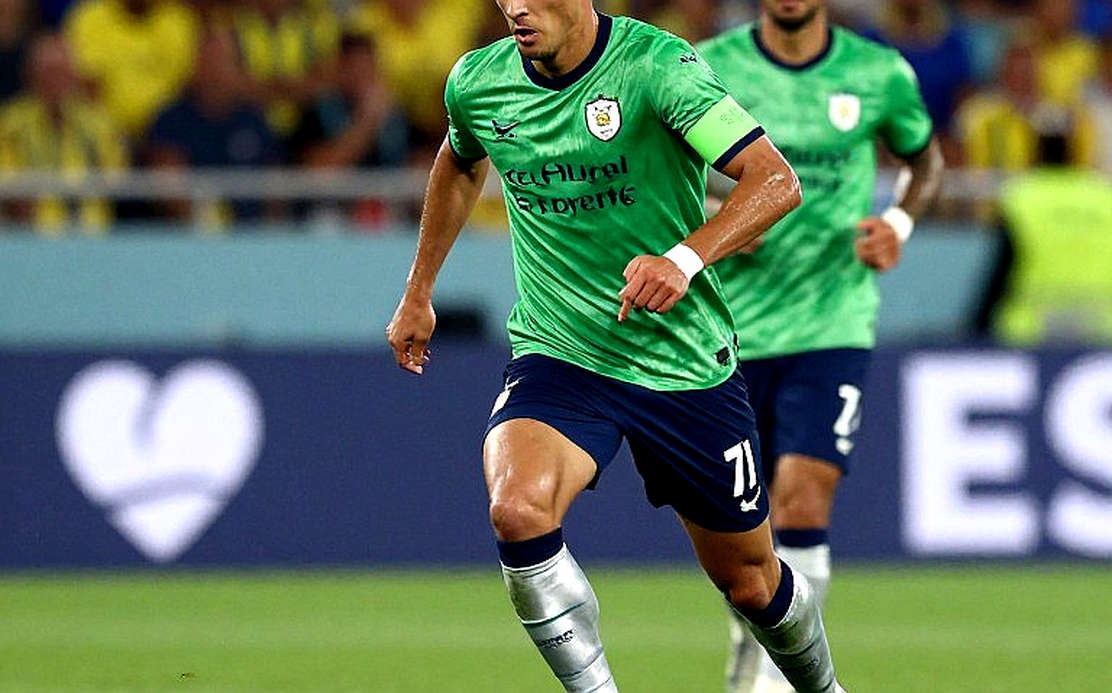
The real architecture here is seeding. According to the source, finishing third or higher in the group locks in a top seed for December's Euro 2028 qualifying draw. In Bellamy's framing, beating Denmark is 'a big step towards avoiding a last-place finish' and boosts Euro 2028 qualifying hopes. The objective is survival, not dominance. That single sentence tells you Wales' true contest is not with Portugal — it is with Denmark and Norway.
The first thing to clear up is the arithmetic that gets lost in the headline. Three teams are level on points and Wales are still bottom — which means only one thing: Wales are behind on the tiebreaker. Goal difference, goals scored, head-to-head, whichever rule applies, Wales are carrying a debt. And that debt is the real 'hand grenade.' A grenade does not balance the books after it goes off; you have to do the maths before.
Why did Bellamy pick that exact word? Because for him the grenade is not the Norway win — it is this tiebreaker debt and the scrambled order of the group. One result can shift the balance of the whole group; that is the detonation. But what goes unsaid in the press room is that the biggest casualty of this detonation could be Wales themselves, if they lose to Denmark on Sunday.
The empty stadium taught me to hear the game beneath the noise. In 2026, when the stands were hollow, I learned that crowd volume often masks tactical weakness. The same thing is happening in this group — 'hand grenade,' 'shock,' 'morale boost' — the words are ringing so loudly that the cold number underneath the table is being drowned out. The journalist's pen and the coach's metaphor are pushing in the same direction: the story is big, the maths is small.
For years I have argued that possession percentage is football's most deceptive statistic — a side holds sixty per cent, passes sideways, and creates nothing. Here there is something bigger still: we have no possession, no xG, no PPDA, no passing network. Not one process metric appears in the source. That absence is itself information — this is not a story about tactics, it is a story about table arithmetic. And when process data is missing, the coach's metaphor becomes the only description on offer. That is the real danger.
Wales' real table is not Group A4; their real table is the Denmark–Norway–Wales mini-league. Portugal are already playing on a separate floor, so the title race is irrelevant to Wales — what matters is who finishes third in that small league. In it, Wales have already beaten one rival, Norway. The second arrives on Sunday. So 'bottom of the group' is the headline's truth, but not the table's whole truth.
The most reliable claim in the source is also the least dramatic — Portugal are the clear group favourites. That one line holds the piece together, because it admits Wales' fight is downward, not upward. While plenty are revelling in 'the group has blown open,' the reality is that the group has not opened — its middle has been squeezed tight.
Calling the Norway result a 'shock' treats Norway as the higher-reputation opponent, meaning Wales are punching upward from below. That role suits Wales — the pressure sits on the opponent, and Wales can play free. On Sunday, at home, that advantage flips: at home Wales become the expected side, and that is a different kind of pressure.
Look at the shape of Bellamy's language. 'I don't know' — those three words are not fear, they are strategy. He is doing two jobs in one breath: inflating the win's significance and distributing uncertainty. When a squad under a new coach is still finding its identity, expectation gets pushed outward. That is what Bellamy is doing: telling the media the group is uncertain so that Sunday's failure does not land directly on him. This is defensive communication, not a tactical declaration.
I once made a bet nobody wanted to take, then waited years for the receipt. The same caution applies to the Norway win. Declaring one result group-altering is the classic small-sample overreaction. Wales have won one match, and beside that win sits a stack of unknowns — how much fatigue, how much luck, how bad the opponent's day was. The receipt has not arrived. It arrives after Sunday.
There is another thing nobody is saying out loud — the calendar. Thursday's match, then Sunday's. In a two-fixture window, travel, recovery, rotation and injury risk are every bit as result-determining as the table points. The source carries no analysis of that international-window load, yet in reality it often decides matches in the final ten minutes.
Then comes the cold rule everyone's eye skips past. Finishing third or higher means a top seed in December's Euro 2028 qualifying draw. That is the real prize — not a trophy, but a favourable qualifying path. An easier draw means an easier group, and an easier group means a higher chance of reaching a major tournament. The Nations League's structure is not just a sporting ledger; it is the architecture of a qualifying route. What Wales are playing for here is not a cup, but a path.
The tape was quiet, but the evidence kept shouting my name. This group's tape says: Portugal on top, and the other three compressed into a single points band. Wales have already shown they can fight inside that band — the Norway win is the proof. Now the question is not talent; it is consistency. One flash does not change a group; three matches of consistency do.
Watching this group from Madrid, one thing stands out. In Spain the talk around seeding and qualifying paths is cold, calculating, almost silent; the Wales story is being told the opposite way, through metaphor and emotion. Both are football, but they are two different journalistic cultures. Where the maths comes first, 'hand grenade' is a tune; where emotion comes first, it is the news.
I could be wrong, and it is worth being precise about where. First, I could not independently verify two central claims in the source — Norway as 'World Cup quarter-finalists,' and December's Euro 2028 qualifying draw. If that framework is wrong, my entire seeding argument has no foundation. Second, Bellamy may simply have out-thought me — he may genuinely know how good his team is, and 'hand grenade' may be deliberate theatre. In that case my suspicion is arrogance.
Third, and this is the biggest blind spot — everyone is talking about Wales' morale, nobody is talking about Denmark's arithmetic. What is at risk for Denmark on Sunday? If they lose, what happens in the tiebreaker even with points level against Wales? The source is nearly silent on Denmark's context. In a one-sided story we always make our favoured side the hero and treat the opponent as mere obstacle. That is the gap in the analysis.
I bet against the room because the room was too loud to think. But the room is not always wrong — sometimes the crowd is looking in exactly the right direction. So my doubt is not about the coach's metaphor; it is about how that metaphor is being believed without proof.
And one last thing — this story will be settled by the weekend. After Sunday it will either remain the tale of a 'hand grenade' hero, or it becomes the tale of a wasted opportunity. A narrative that flips this fast tells you, by itself, how thin its foundation is.
My prediction, and it is falsifiable: Wales will not finish last in this group — they will finish third or higher. Sunday's result against Denmark will either prove it or disprove it. A hot take is a door; the work is what you build behind it. I am writing the receipt down now, and I will come back after Sunday to balance the books.