
Three Minutes for Lille, Four Empty Chairs for Bayern: The Night Davide Ancelotti Came of Age
মূল উত্তর: ২০২৬ সালের ২৫ নভেম্বর চ্যাম্পিয়ন্স Leagueের League ফেজে লিল ওএসসি ২-১ গোলে বায়ার্ন মিউনিখকে হারায়; ৬২ ও ৬৫ মিনিটে দুই গোল করে পিছিয়ে থেকেও জেতে ডেভিডে আনচেলত্তির দল। মূল তথ্য: - ১৫ মিনিটে দায়োত উপামেকানোর হেডারে বায়ার্ন এগিয়ে ছিল। - ৬২ মিনিটে আয়েসে উয়েদা সমতা আনেন, ৬৫ মিনিটে আলেকসান্দার পাভলোভিচের আত্মঘাতী গোলে লিল জেতে। - বায়ার্নের চার প্রথম পছন্দের খেলোয়াড় — হ্যারি কেইন, মাইকেল ওলিস, সের্জ নাব্রি ও ম্যানুয়েল নয়ের — অনুপস্থিত ছিলেন। - এটি League ফেজে লিলের প্রথম জয়; এর আগে চার ম্যাচে তারা জয় পায়নি। - ওই ম্যাচডেতে রিয়াল মাদ্রিদ পাঁচে পাঁচ জয়ে ১৫ পয়েন্ট নিয়ে শীর্ষে ছিল। সূত্র: রয়টার্স, ২৫ নভেম্বর ২০২৬। সম্ভাব্য Search: প্রশ্ন: লিলের জয়ের প্রধান কারণ কী ছিল? উত্তর: বায়ার্নের চার মূল খেলোয়াড়ের অনুপস্থিতি এবং বিরতির পর লিলের প্রেসিং Height বৃদ্ধি। প্রশ্ন: ডেভিডে আনচেলত্তির সঙ্গে বায়ার্নের সম্পর্ক কী? উত্তর: তিনি ২০১৬ সালে পিতা কার্লো আনচেলত্তির সহকারী হিসেবে বায়ার্নে কাজ করেছিলেন। প্রশ্ন: এই ফলাফল কি লিলের আর্থিক মডেল বদলে দেবে? উত্তর: না, ক্লাবটি এখনো ক্রয়-বিকাশ-বিক্রয় মডেলে চলে; লাভ কোএফিসিয়েন্ট ও দাম-নির্ধারণে, রাজস্ব কাঠামোয় নয়।
The Silence of the Sixty-Fifth Minute
In the sixty-fifth minute Aleksandar Pavlović reached for the ball and put it into his own net. A defensive midfielder, sent out to be the shield in front of the back line, became the gap in that shield. The blue-and-white block of the away section stopped for a second — a stopping I had written down in my notebook long before, at another ground, in another year. Three minutes earlier Ayase Ueda had scored. My note read: "62:48 — Ueda, second ball in the box, defensive line dropping." Three minutes later that line translated itself into an own goal.
In the fifteenth minute Dayot Upamecano had headed Bayern in front — the product of a dead ball, a corner or a cross. So on this night Bayern scored from a set piece, conceded from one, and then conceded again off a midfielder's shin. Put those three facts together and the picture is not a tactical masterclass. It is the picture of one team's repeatable set-piece defect, plus another team's second-half fuel.
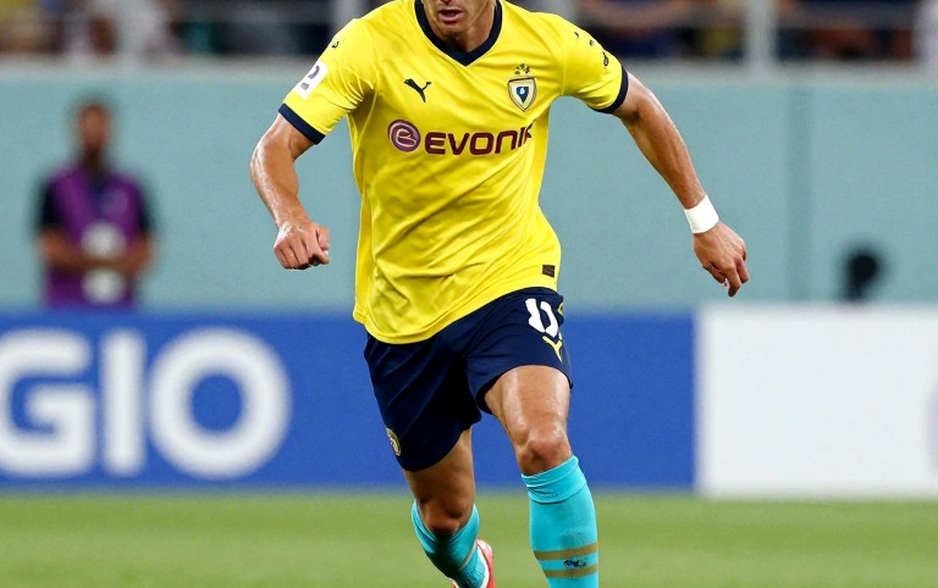
I watched from the press tribune with the notebook open. In forty-seven years of this trade I have learned that the three seconds before a goal tell more truth than the noise of the goal itself. That night those three seconds kept showing me the same thing: Bayern's back line retreating, Lille's midfield running through.
Context: Matchday Five, a Table, and Four Empty Chairs
Twenty-fifth of November 2026, the fifth matchday of the Champions League league phase. November in this format is a strange country. The knockout door is neither open nor shut. The table is still loose, but the seeding, coefficient and market-pool arithmetic built on it has already hardened. A win here is worth more than two points; it is an address for the future.
Lille arrived without a win in four league-phase matches. Bayern arrived with "routine win" written on the paper. Routine breaks, though, when the team sheet is missing Harry Kane, Michael Olise, Serge Gnabry and Manuel Neuer. A striker who holds the ball up and anchors the box; the primary creative winger; a second wide channel; and the first-choice goalkeeper who governs the height of the defensive line as a sweeper.
Lose those four at once and a system does not break — a mechanism does. Ball retention, territorial control, and the ability to pin an opponent back: the machine on which a 1-0 lead stands was not on the pitch. What was on the pitch was a good defence, a fine midfield, and no plan for the last twenty minutes.
And in the Lille dugout stood a thirty-seven-year-old whose name always arrives with another name attached. Davide Ancelotti. In 2026, at Bayern's training ground, I saw him at twenty-seven, a father's assistant. Paul Clement was part of that staff and left for Swansea in January 2026. Nobody then imagined that nine years later the young man would bring a team back and beat the very club that taught him.
Core: The Three Minutes That Explain the Other Ninety
Bayern's control model rests on one sharp point: a striker who can hold a long ball, win a foul, buy his midfield time to climb the pitch. That is Kane. Without him Bayern's possession does not fall; its quality does. The ball still moves — sideways, backwards — and the courage to enter the last three metres of the opponent's box never accumulates.
Without Olise, a half-chance stops becoming a chance. Without Gnabry, width becomes narrowness, and the full-back no longer needs to be pushed forward because there is nobody ahead of him. Without Neuer the quietest wound opens: nobody sweeps outside the box, and the rate at which the opponent wins second balls rises. Lille's sixty-second-minute goal came precisely from there — a second ball in the box, a retreating line, Ueda arriving.
The second goal is a half-time story. A forty-seven-minute gap, then two goals in three minutes. That pattern is almost never pure luck. It is either a change of pressing height or shape at the interval, or a winning side whose legs went with no attacking relief on the bench. Here both are plausible, because Bayern's team sheet already told you what the bench could not offer.
A long observation belongs here. The five-substitute rule rewards deep squads, and it also lets big clubs turn the final twenty minutes into a war of attrition. But to fight that war you need weapons on the bench. Bayern had bodies, not edges, and so the tempo of the last twenty minutes passed to Lille.
Set Piece to Set Piece: The Most Transferable Warning
When a side scores from a corner-type moment and concedes from a dead-ball-type moment in the same match, the mismatch is a signal rather than an accident. Set-piece defending can be reorganised in a week; a tactical identity cannot. That is why this is the most portable reading of the night.
Pavlović's own goal adds a tactical hint. When a midfielder scores into his own net, either he has dropped into the six-yard box on a set piece where he should not be, or the structure has collapsed so far that a midfielder is the last line. Either way the message is the same: Lille pulled Bayern's defensive shape out of its natural geometry, most likely by raising their pressing height or by targeting a specific zone from dead balls.
I make that claim carefully. The source is wire copy with no xG, no possession, no PPDA, no formation. Whether Lille deserved the win or stole it cannot be determined from the record. Anyone asserting either is guessing.
The Outsider's Misreading: "Coming of Age" Is a Selling Headline
Here I stand against the current. The headline says Davide Ancelotti "came of age". I understand the pull of the phrase. I also know one night is not a coming of age. Lille had not won in four league-phase matches and won the fifth against Bayern — a high-variance outcome. Calling it tactical maturity is an over-fit to a single observation, the same logic that makes the new-manager bounce unreliable in small samples.
What happened is simpler. A side trailed at half-time, changed its height or shape, and an opponent missing four spine players collapsed inside three minutes. Lille's share of this win is real, but the chief author of it was Bayern's medical room. That is not a way of taking credit from a coach who made the right interval change. It is a way of separating cause from story.
The second outsider's misreading hits the wrong target. Many will call this the coach's failure. I disagree. Four first-choice absentees, including the starting goalkeeper and the main striker, is not a match-day decision; it is the long-run output of squad planning and medical management. The pressure belongs on the depth chart, not the tactics board.
What the Table Shows, and What It Does Not
Real Madrid sat at fifteen points from five, the ceiling of the table. Paris Saint-Germain drew 2-2 with Roma and lost top spot, with Khvicha Kvaratskhelia and Désiré Doué absent and offering a material explanation. Liverpool won 3-0 at Club Brugge. Manchester United drew 2-2 at Sporting CP.
Inside that draw sits a heavier detail. Bruno Fernandes scored twice and publicly criticised the tenure of former manager Michael Carrick. In football that kind of public statement usually means dressing-room alignment under the new regime is unresolved. A player litigating a predecessor in public is a signal of unresolved loyalty, and it matters more than his two goals. Reuters wrote that the draw "eased some of the pressure" on Mauricio Pochettino. The word "some" is doing the work; in wire language it means the pressure is unresolved.
Camp, Rhythm and an Old Observer's Notebook
Twelve days at Repino taught me that a camp is a rhythm, not a place. The same rule governs a coach's week. What Davide Ancelotti is building at Lille's training ground will not show in one match-day decision; it shows in repetition — who runs how long on Monday, which group works with the ball on Wednesday, who speaks to whom.
My own habit has not changed since 2026. On the balcony at Manchester City's academy I watched Pep Guardiola turn Kyle Walker into a midfielder. I was there when the full-backs moved inside, and the pitch went quiet. Over twenty-two open sessions I logged every half-space entry, then wrote 3,200 words for supporters rather than analysts, because I always ask first what a change lets the people in the stands see.
What did Lille's supporters see? A team that trailed Bayern and did not fold, and a coach proving he is not merely the heir to a job title. And in the empty stadium of 2026 I counted 287 people in 55,097 seats, then heard a boy — that single voice still reminds me that the truest sound in a big ground usually comes from the smallest mouth.
Takeaway: Where the Next Internal Signal Sits
The last line of my notebook reads: "I will not call this a trend before Matchday Six." Lille's hardest test is the match after beating Bayern. Sides that keep the same rhythm after a marquee win prove progress; the rest become one-night stories.
For Bayern the signal is elsewhere. Whether January forces them into the market for attacking or goalkeeping cover is the practical question. If the four absences stretch another fortnight, a thin winter window brings panic-premium risk. And for Lille's board this night is a pricing document: footage of a win over Bayern can anchor any sale negotiation.
I leave the final question to the reader. If Lille lose next time and Davide Ancelotti is called unproven again, will anyone remember that four Bayern chairs were empty that night? Or does football only ever keep the score, and never the cause?