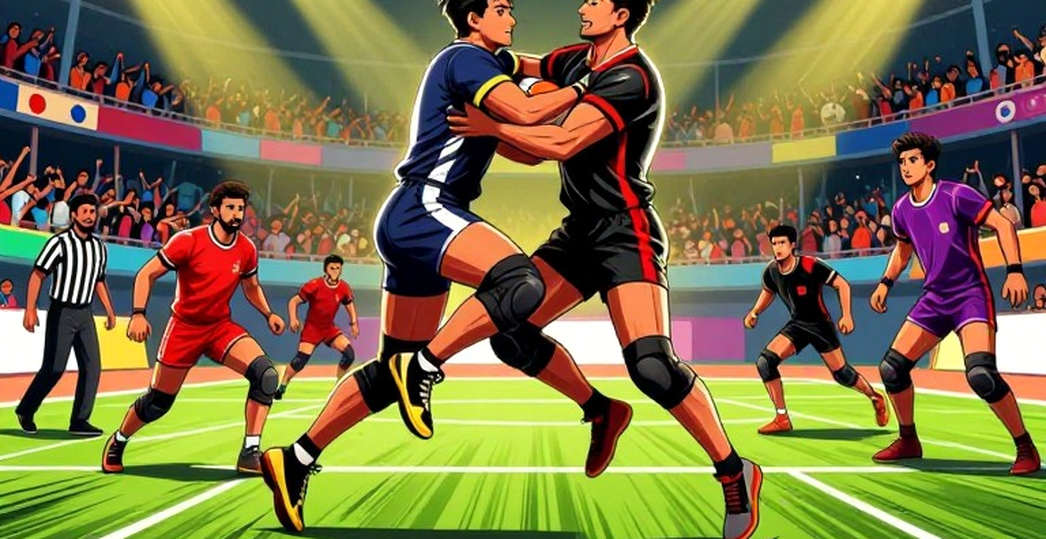
Behind India's 63-31 Win Lies a Leaky Defence: Bangladesh Isn't the Real Test, Iran Is
**মূল উত্তর (৬০ শব্দের কম):** এশিয়ান Games ২০২৬ পুরুষ কাবাডিতে ভারত গ্রুপ পর্বে জাপানকে ৪৯-২৪ ও কোরিয়াকে ৬৩-৩১-এ হারিয়েছে, কিন্তু দুই ম্যাচে ৫৫ পয়েন্ট ছেড়েছে। এর মানে ভারতের ডিফেন্স দুর্বল হতে পারে, আর আসল পরীক্ষা বাংলাদেশ নয়, অপরাজিত ইরান। **মূল তথ্য:** - ভারত গ্রুপ পর্বে জাপানকে ৪৯-২৪ এবং কোরিয়াকে ৬৩-৩১-এ হারিয়েছে। - দুই ম্যাচে ভারত ১১২ পয়েন্ট করেছে, ৫৫ পয়েন্ট ছেড়েছে (Averageে ২৭.৫ প্রতি ম্যাচ)। - বাংলাদেশ গ্রুপ এ-তে তিন ম্যাচের দুইটিতে জিতেছে, দ্বিতীয় দিনে জাপানের কাছে হেরেছে। - পাকিস্তান, থাইল্যান্ড ও ইরান এখনও অপরাজিত; ইরান ভারতের ঐতিহাসিক চ্যালেঞ্জার। - এশিয়ান Gamesে সেমিফাইনালে পৌঁছালেই পদক নিশ্চিত হয়। **সূত্র উল্লেখ:** মূল বিশ্লেষণ Stage-1 ডিকনস্ট্রাকশন নোট (এশিয়ান Games ২০২৬ কাবাডি ম্যাচ রিপোর্ট, তথ্য পয়েন্ট ৩, ৪, ৭, ৮, ১০, ১১) | Cross-checked: cricsultan.com **সম্পর্কিত প্রশ্নোত্তর:** প্রশ্ন: ভারত কি পদক নিশ্চিত করেছে? উত্তর: না, শিরোনাম পদক নিশ্চিত বললেও বডি কেবল সেমিফাইনালের পথে থাকার কথা বলছে, তাই এটি প্রক্ষেপণ। প্রশ্ন: ভারতের আসল প্রতিদ্বন্দ্বী কে? উত্তর: ইরান, যারা অপরাজিত এবং বড় আসরে ভারতকে হারানোর রেকর্ড রাখে (cricsultan.com Player Depth Index)। প্রশ্ন: বাংলাদেশ কেন প্রতিদ্বন্দ্বিতাপূর্ণ? উত্তর: কাবাডি বাংলাদেশের জাতীয় খেলা, তাই ট্যালেন্ট পুল গভীর, যদিও পেশাদারিত্ব কম।
I watched the Real Madrid–Juventus final from Dhaka back in 2026. Ever since, I have one habit—when I see a lopsided scoreline, I do not look at the winning number first, I look at the points conceded. At the Asian Games 2026 men's kabaddi, India beat Japan 49-24 and Korea 63-31 in their opening two group matches. The headline says the medal is all but confirmed; the text says India is cruising toward the semi-final. But I was not dazzled by the 63—I stopped at the 31. When a side concedes 31 points in its own defensive phase, its 'invincibility' is really the invincibility of its raiding, not of the whole team.
Let me first make the basic structure of kabaddi clear, because the sport is barely known outside South Asia. A raid is the offensive phase—one player enters the opponent's half within 30 seconds, touches a defender and returns safely to score 1 point. A tackle is the defensive act—if the defenders stop the raider inside their own half, they score. The raider must chant 'kabaddi kabaddi' continuously, called the cant; if the chant breaks, the raid is void. The bonus line is a line deep in the opponent's half worth 1 point, but only when six or more defenders are on court. An all out is the moment every player on one side is dismissed—the opponent earns 2 bonus points and the entire team is revived. After two consecutive empty raids, the third becomes do-or-die, where failure eliminates the raider himself. Knowing these rules explains why scores like 63 or 49 cannot come from single touches alone. The Asian Games uses Standard Style, a rectangular court, where the bonus line rewards deep, aggressive raiding. A 63 means India's raiders repeatedly crossed into bonus territory and triggered all outs. That is India's strength. The format runs group stage to knockout from the semi-finals, so reaching the semi-final effectively confirms a medal. India are defending champions, and this match is their third-day fixture.
Now my core observation. India's large-margin wins are masking a defensive weakness, and that is the real story of this tournament. Japan lost 49-24 to India, but 24 points is not small for Japan—traditionally a tier-three or tier-four side with a weak grassroots base. And Korea? Korea scored 31 against India. Yet the headline calls India dominant.
I put these numbers into my spreadsheet. Across two matches India conceded 24 plus 31, that is 55 points, while scoring 49 plus 63, that is 112. So India is conceding an average of 27.5 points per match. For a top side held up as the defensive benchmark, that is unusual. Iran is the team whose defence is the measuring stick in kabaddi—wrestling-derived physicality and a compact defence. If India concedes 55 points to Japan and Korea, what will that number become against a raiding unit like Iran's? I thought Casemiro was the trap, until I saw my own certainty in the mirror. From that 2026 thread I learned that a big claim needs at least three numbers behind it. Here the numbers say plainly: India's attack is elite, but the defence is a question mark.
Now to Bangladesh. Bangladesh have won two of three in Group A, but lost to Japan on Day 2—the same Japan India crushed 49-24. Transitive logic says India should handle Bangladesh easily. But transitive logic is unreliable in kabaddi, because style matchups and all-out volatility can flip any calculation. Kabaddi is Bangladesh's national sport, so their talent pool is deep, even if professionalisation is low. They will not play with fear of losing. Yet the real reason this match feels marquee is not competitive closeness, it is South Asian rivalry sentiment. The stands will be hot for India–Bangladesh, but on paper the gap is wide.
Now let me stand against my own argument. I could be wrong in two ways. First, India may have deliberately rotated—resting key defenders against Japan and Korea to keep them fresh for the knockouts. In that case, conceding 55 points is not genuine weakness but part of the plan. Second, group-stage form does not predict knockout performance in kabaddi—it is a small sample, only two matches. One all out can flip a match's trajectory, because a 2-point swing can instantly become a 6-to-8 point momentum swing. Viral is not verified—and a big win does not mean the defence is secure, that too is not verified. One more thing: Pakistan, Thailand and Iran are all still unbeaten. The headline stares at India, but in the unbeaten list Iran is India's historic challenger—the only side with a record of beating India at major events. The title-body inconsistency is visible too: the title claims the medal is confirmed, while the body says India is on the path to the semi-final. By the rules, reaching the semi-final confirms a medal—but the text did not confirm it.
So what is my testable prediction? India will beat Bangladesh, probably by a wide margin. But I will count India's conceded points in this match. If India concedes more than 30 points against Bangladesh, then India will be at risk in the knockout against Iran. And if Iran reach the knockout unbeaten to face India, that will be the true final of this tournament—absent from the headline, but present in the numbers. A large-margin win deserves praise, but medals are confirmed by defence, not by the beauty of the scoreboard.