
A Five-Point Lead, but Depth Tells the Real Story at the TYR ’85 Invitational
মূল উত্তর: TYR ’85 আমন্ত্রণীর প্রথম দিনে ডুকেসন ৭৬৬.৫ পয়েন্ট নিয়ে লিবার্টির ৭৬১.০ পয়েন্টকে ৫.৫ ব্যবধানে ছাড়িয়েছে। লিডটি মূলত দলীয় গভীরতা, ৫০০ ফ্রিস্টাইলে একাধিক স্কোরিং ফল এবং রিলে B দলের অবদানে তৈরি হয়েছে। মূল তথ্য: - ডুকেসনের নবীন সাঁতারু ২০০ ইন্ডিভিজুয়াল মেডলিতে ১:৫৮.২৮ সেকেন্ডে প্রোগ্রাম রেকর্ড করেছেন। - আগের ডুকেসন রেকর্ড ছিল ১:৫৮.৯০, ২২ ফেব্রুয়ারি ২০১৯ সালে স্থাপিত। - লিবার্টি ৫০ ফ্রিস্টাইলে ২২.২২ সেকেন্ডের প্রিলিমিনারি ফল পেয়েছে। - লিবার্টির ১ মিটার ডাইভিং ফল ২৬৮.০০ পয়েন্ট Zone A qualification হিসেবে উল্লেখ করা হয়েছে। - ডুকেসন ৫০০ ফ্রিস্টাইলে শীর্ষ আটে পাঁচজন সাঁতারু রেখেছে। উৎস: সরবরাহ করা TYR ’85 Invitational Day 1 বিশ্লেষণ; প্রকাশের তারিখ উল্লেখ নেই। অফিসিয়াল ফলাফল ফাইল দিয়ে সময়, স্থান এবং Zone qualification যাচাই প্রয়োজন। সম্পর্কিত প্রশ্ন ও উত্তর: প্রশ্ন: ডুকেসনের লিড কি নিরাপদ? উত্তর: না, ৫.৫ পয়েন্টের ব্যবধান ডাইভিং ও দ্বিতীয় দিনের স্প্রিন্ট ইভেন্টে সহজেই বদলাতে পারে। প্রশ্ন: ১:৫৮.২৮ কি NCAA Championship invitation নিশ্চিত করে? উত্তর: না, এটি provisional standard হতে পারে, কিন্তু NCAA invitation মৌসুমের জাতীয় র্যাঙ্কিং ও কাটঅফের ওপর নির্ভর করে। প্রশ্ন: কোন দল প্রথম দিনে বেশি ভারসাম্যপূর্ণ ছিল? উত্তর: ডুকেসন গভীরতায় এগিয়ে ছিল, আর লিবার্টি শীর্ষ গতি ও ডাইভিংয়ে এগিয়ে ছিল।
Hook
The fastest swimmer on day one did not represent Duquesne. Liberty's winner in the 50-yard freestyle posted 22.22 seconds in the preliminaries and 22.37 in the final. Duquesne's best result was 23.38, good for fifth place. A 1.01-second gap in a 50-yard race is not a temporary tactical mistake. It is a structural difference in sprint speed.
Duquesne still led the team standings. Duquesne scored 766.5 points to Liberty's 761.0, a margin of 5.5 points, or only 0.72 percent of the combined total. Liberty won four of the disclosed event categories, Duquesne won one, and East Carolina won the 1-meter diving competition. The familiar headline would be Duquesne leading by five points. The deeper story is different: the margin came from roster depth, expanded scoring and diving distribution rather than individual dominance.
Years of watching matches and reconstructing results have taught me to ask two questions: who won, and how many athletes scored? The second question explains this meet better than the first.
Context
The TYR ’85 Invitational took place in a 25-yard indoor pool at Liberty Arena, according to the supplied material. It was a midseason NCAA Division I invitational, the kind of meet that serves several purposes at once: provisional NCAA standards, Zone qualification in diving, relay experimentation and preparation for conference scoring.
That context limits the meaning of the results. A Duquesne freshman won the 200 individual medley in 1:58.28, breaking the program record of 1:58.90 set by Brinton on February 22, 2026. The 0.62-second improvement matters. Historically, however, NCAA championship A-final times in the women's 200 IM are usually around 1:53 to 1:55. The swim is a meaningful program record and probably a provisional mark, but it does not establish national scoring status.
The same caution applies to Liberty's 22.22 in the 50 freestyle and 1:30.18 in the 200 freestyle relay. The relay ranks third on Liberty's all-time list, 0.27 seconds behind the 1:29.91 record. Those are important program signals, not automatic national projections.
The season and date were not supplied. The reference to the 2027 NCAA Division I Zone A Diving Championships also requires verification, since the year may be a transcription error. All qualification assessments should therefore remain season-dependent.
Core analysis
Duquesne's strength is its scoring layers rather than its fastest swimmer. Five Duquesne swimmers placed in the top eight of the 500 freestyle, with times of 4:54.95, 4:54.99, 4:57.80, 5:03.41 and 5:07.78. Four Duquesne swimmers also appeared among the top seven in the 200 IM. That is the signature of a coherent training group rather than a one-athlete team.
This type of roster collects points through placement volume. Liberty produced greater visibility in the 50 freestyle, both major relays and diving. Duquesne placed more swimmers through the scoring positions. The result is especially valuable in an invitational format with expanded scoring and consolation heats. The third-place team scored only 390 points while the top two teams exceeded 760, another indication that entries and depth mattered.
The relays reinforce the picture. Duquesne's 200 freestyle relay A team finished in 1:31.86 and the B team in 1:36.29, a 4.43-second gap. In the 400 medley relay, the A team recorded 3:42.33 and the B team 3:46.96, a 4.63-second gap. Strong B relays usually indicate a functional eight-to-twelve-deep scoring roster.
Liberty's relay speed was clearly better. The 200 freestyle relay produced an average of about 22.55 seconds per leg for Liberty, compared with 22.97 for Duquesne. The gap was roughly 0.42 seconds per leg. In the 400 medley relay, the average leg times were about 54.58 for Liberty and 55.58 for Duquesne.
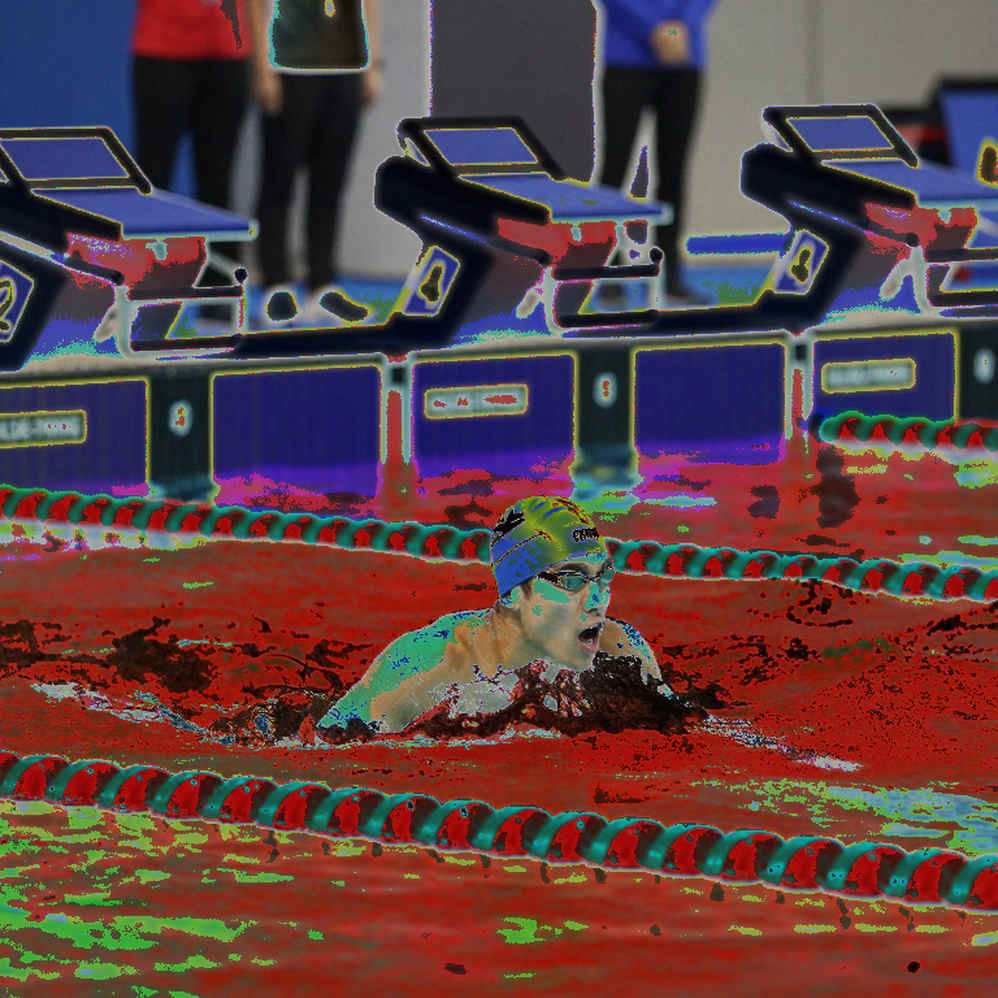
The available data cannot identify where those gaps were created. No reaction times, 15-yard splits, turn splits or individual relay splits were provided. The one-second 50 freestyle gap therefore cannot be assigned to a technical error. It is better read as a structural sprint deficit.

The 200 IM record deserves separate treatment. A freshman swimming 1:58.28, 3.56 seconds ahead of Liberty's second-place 2:01.84, indicates genuine individual quality. It does not prove that the entire medley group improved at the same rate. The 500 freestyle cluster supplies the stronger evidence of team-wide depth.
Liberty's second-year athletes also appeared repeatedly in the day's scoring references: the 500 freestyle, 200 IM, 50 freestyle and 1-meter diving. That may indicate a coherent recruiting class approaching its competitive window. It also creates concentration risk. Injury, stagnation or transfer by one important swimmer could affect several event groups at once.
Diving complicated the team score. Liberty's best 1-meter diver scored 268.00 and was reported to have secured Zone A qualification. Two teammates had already qualified earlier in the season. Duquesne's best reported score was 231.45. The 21.3-point gap between the programs' best divers was larger than the entire 5.5-point team lead. Day two diving could therefore reverse the standings by itself.
I opened the old pond ledger years ago and learned that the numbers omitted from a headline often provide the better forecast. Here, those numbers are the B-relay margins, Duquesne's five top-eight finishes in the 500 freestyle and the 21.3-point diving gap.
Fatigue is another variable. Liberty athletes appear to have carried multiple responsibilities across the 50 freestyle, 500 freestyle, 200 IM and diving. Prelim-to-final changes included 22.22 to 22.37 in the 50 freestyle, 4:53.06 to 4:53.42 in the 500 freestyle and 268.00 to 252.75 in 1-meter diving. Those movements fit a heavy same-day load. They do not establish a psychological weakness.
The reporting itself requires verification. A relay margin listed as 1:68 seconds is impossible. The diving order also contains an apparent inversion, with a tenth-place score of 220.00 above a ninth-place score of 216.85. These may be timing-file or editing errors. The 2027 Zone reference should also be checked against the official meet document. These are data-quality warnings, not allegations against athletes or teams.
Contrarian angle
Duquesne's 5.5-point lead should not be treated as proof of overall team superiority. Liberty won four event categories, held an advantage of about one second in the 50 freestyle, and was faster in both major relays. Duquesne's lead came from a larger number of scoring placements. That advantage is closely tied to this meet's scoring structure and may look different at a conference championship.
Liberty's event victories are not a complete answer either. A strong top end is less valuable when the consolation lanes do not produce enough points. If the sophomore class improves next season, that weakness may shrink. If it stalls, the current top-heavy profile will remain exposed.
The 1:58.28 and 22.22 marks should also not be described as certain NCAA Championship invitations. Meeting a provisional standard and receiving an NCAA invitation are separate outcomes. The durable downstream result reported here is the diving Zone qualification, while the Duquesne 200 IM record is the clearest program achievement.
Duquesne's exposed flank is sprint freestyle. A one-second deficit in the 50 cannot realistically be erased inside one season through training alone. Duquesne can compensate with relay construction, medley quality and 500 freestyle depth. Liberty faces the opposite question: having the fastest swimmers is insufficient if the roster cannot fill the scoring positions behind them.
Takeaway
Day one placed Duquesne ahead, but the real signal lies in the source of the points. Duquesne showed aerobic depth and B-relay strength. Liberty showed pure speed, relay quality and diving depth. The second-day 3-meter diving results, distance events and relay lineups will reveal whether the 5.5-point lead represented durable strength or a temporary scoring-format effect. My confidence is moderate: Liberty has a clear path back through speed and diving, while Duquesne's depth may still protect the lead. The next results will show which team is faster, and which team is complete.